
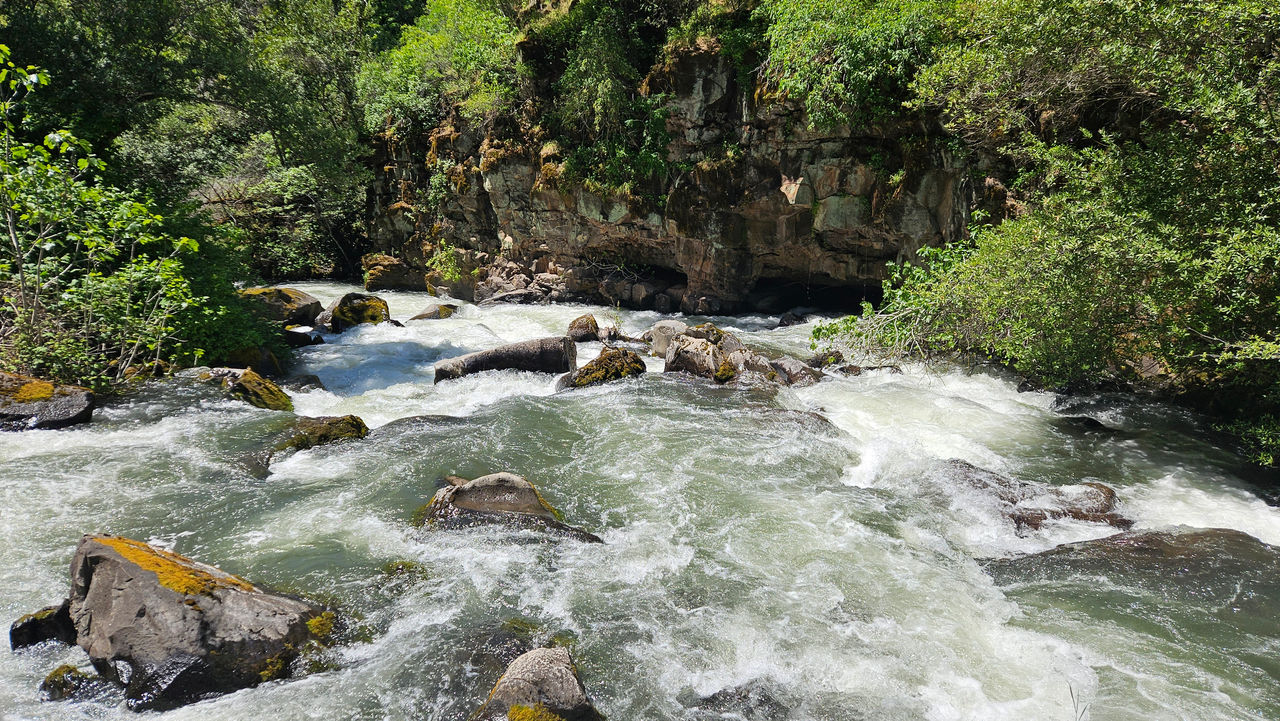
PG&E owns and operates the Battle Creek Hydroelectric Project in northeast California. The Federal Energy Regulatory Commission (FERC) issued the project's 50-year license in 1976. The project is located along the North and South Forks of Battle Creek in Shasta and Tehama counties. The project uses water for power generation from these forks, plus several tributaries and springs.
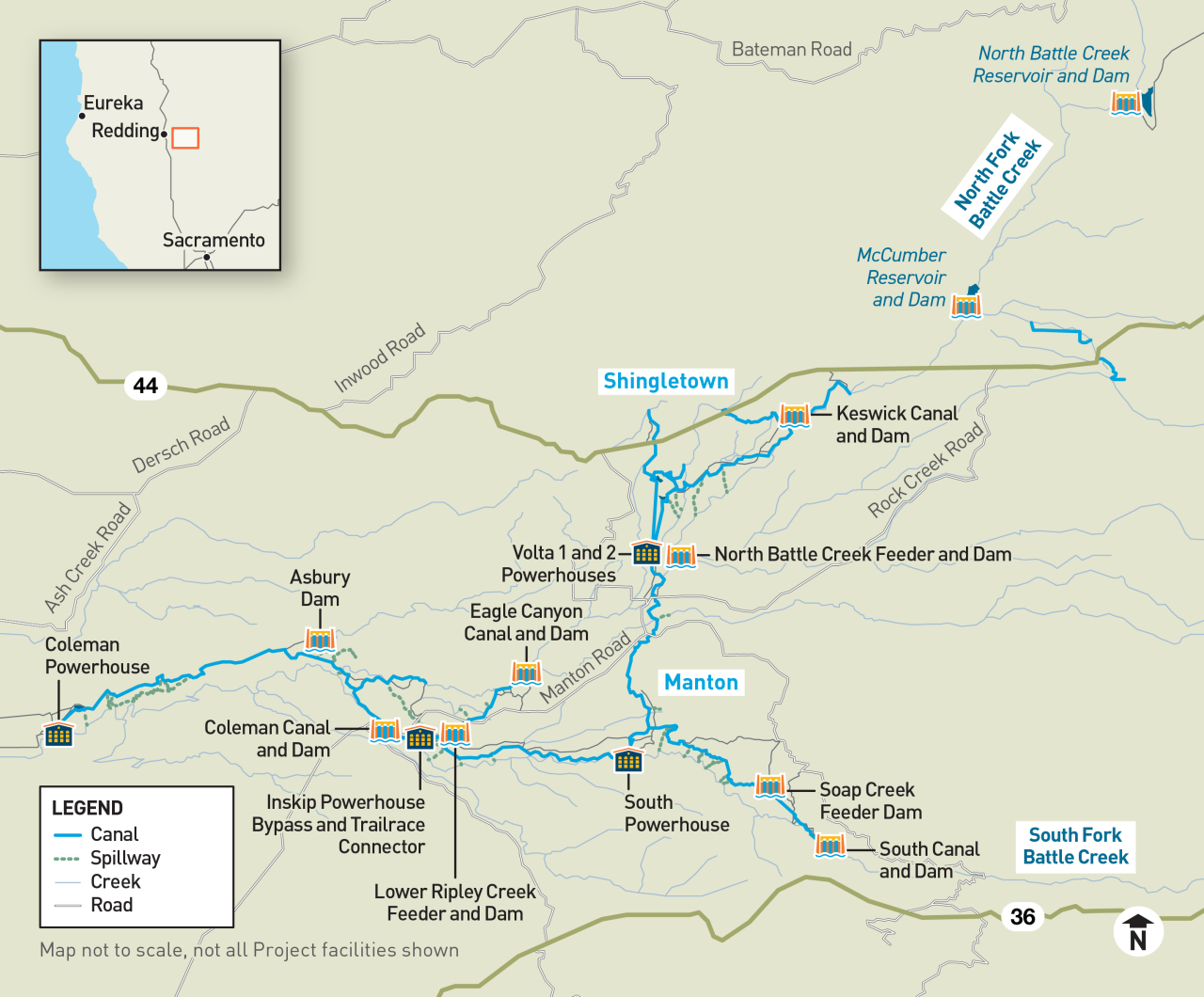
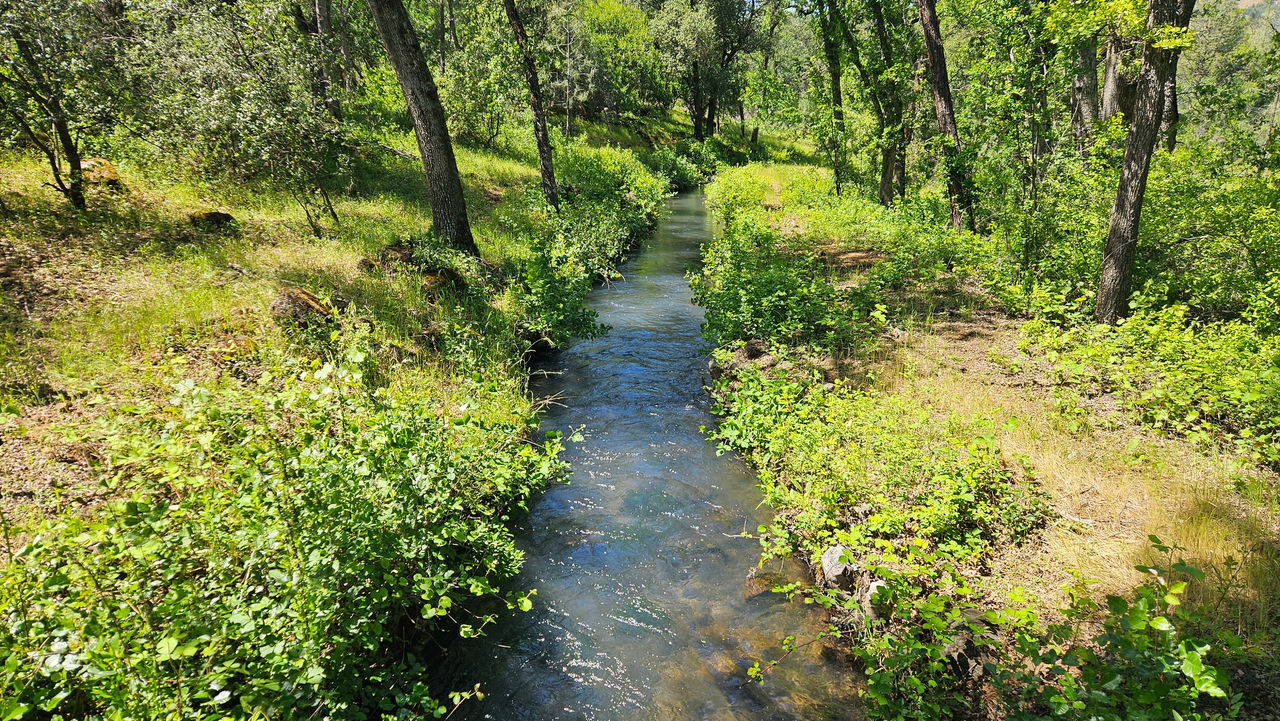
The project consists of several types of facilities. These include dams, canals, pipes and powerhouses. Some of these facilities are more than 100 years old. They occupy PG&E-owned, private and federal lands.
| Two upstream storage reservoirs |
| Three forebays |
| 20 canals and pipelines |
| 15 diversion dams |
| Two fish screens and ladders |
| Five powerhouses |






In 2020, PG&E decided not to apply for a new FERC license. We decided running the project was too costly for our customers.
In early 2021, FERC issued a public notice of interest. The notice was to see if any other groups were interested in taking over operation of the project. FERC received no responses from interested third parties.
In late 2022, FERC required PG&E to plan for surrender of the project. PG&E is currently developing the License Surrender Application (LSA). FERC must approve the application before any decommission starts.
PG&E is giving up the federal license that allows it to operate the Battle Creek Hydroelectric Project. This process is called a license surrender. In 2020, PG&E decided not to apply for a new FERC license. We decided it was too costly for our customers. PG&E reviewed other options, including whether a third party might take it over. When no third party expressed interest, FERC required PG&E to begin the license surrender process.
PG&E is preparing the LSA and proposed decommissioning plan now. It will go to FERC for approval. Federal rules require PG&E to file the LSA before decommissioning takes place.
What does decommissioning mean? What is a decommissioning plan?
Decommissioning means safely retiring energy facilities. For the Battle Creek Hydroelectric Project, this may include:
- Removing or changing equipment and structures
- Leaving some structures in place if they can remain safely
- Restoring land and waterways impacted by decommissioning activities
A decommissioning plan explains how this work would be done safely. PG&E would develop this plan with input from:
- Agencies
- Landowners
- Tribes
- Other stakeholders
License Surrender Application
The final LSA will include:
- Reason for surrender application and a copy of the existing license and amendments
- Description of existing Project facilities and proposed decommissioning plan
- Environmental report assessing potential decommissioning impacts to environmental resources
- Proposed measures addressing potential construction impacts
The FERC processes the LSA to ensure it is complete. Once complete, FERC will issue a public notice. The notice will include at least a 30-day public comment period. Read more about the surrender process.
Decommissioning process
There are several ways Battle Creek Hydroelectric Project structures can be decommissioned.
Possible decommissioning options
| Structure left in place |
| Structure changed to ensure long-term safety |
| Structure retired and buried in place |
| Structure retired and taken off site |




To develop the LSA and decommissioning plan, PG&E will work with many:
- State and federal agencies
- Landowners
- Tribes
Some infrastructure may eventually be changed or retired. The decommissioning plan will consider:
- Public safety
- Environmental and cultural resources
- Maintenance and monitoring
PG&E has begun planning and preparing for the development of the surrender application. The company has also begun its stakeholder outreach efforts.
The LSA will be developed with opportunities for public input. The LSA will include a proposed decommissioning plan. The plan describes how Battle Creek Hydroelectric Project facilities and infrastructure will be safely shut down.
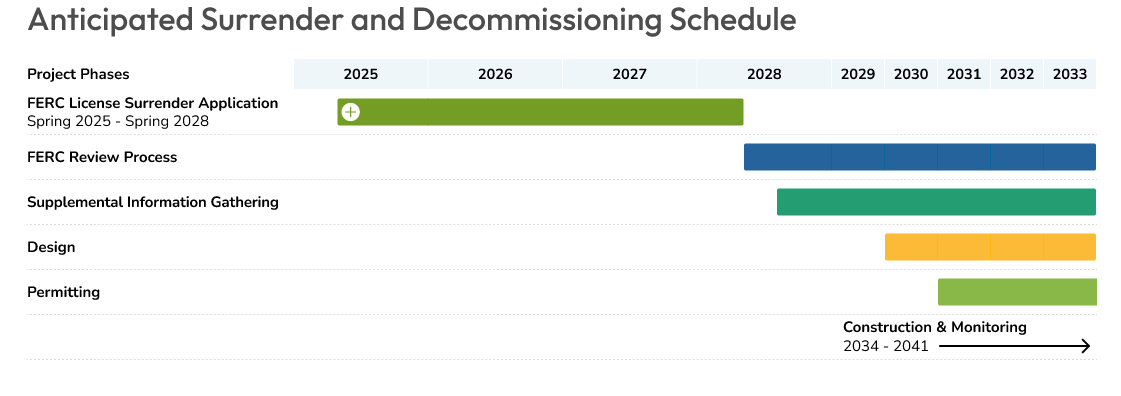
The license surrender process will take many years. PG&E will continue to operate the project under current license conditions until physical decommissioning begins. This includes regular canal outages in the spring and summer. These seasons are when the canals will be dewatered for regular maintenance. Changes to project facilities resulting from this process aren't planned until the mid-2030s.
More on hydroelectric
PG&E's hydroelectric system
Discover how hydroelectricity provides safe and reliable power.
Land use and sales
Learn about PG&E lakes, reservoirs and watershed lands.
Hydropower and water safety
Stay safe near dams, reservoirs and other waterways.