©2026 Pacific Gas and Electric Company
IMPORTANT

The Number We Didn’t Know We Should Have Saved: 211
Date: October 21, 2026
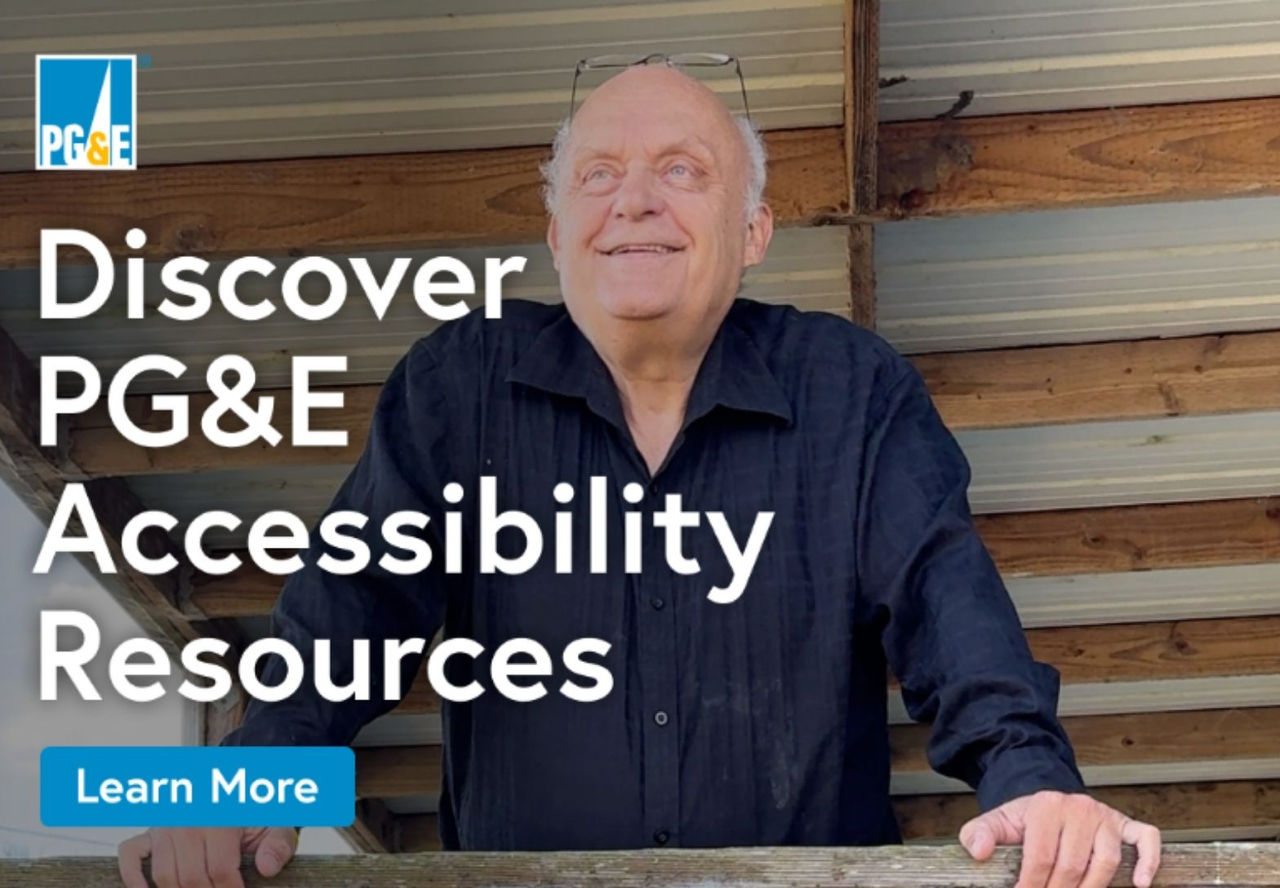
Vern: I live in western Sonoma County, with huge grazing fields surrounding my property. I had always dreamed of living rurally to feel the closeness of nature, see the magic of the night sky, and get out from under the pressures of a frenetic lifestyle.
The omnipresent danger of fire was something I'd never encountered before, and it forced me to reckon with elements of living rurally I hadn't yet dealt with. Years ago, I spent nearly a decade as a support volunteer with my local fire department. It helped me realize just how little knowledge I had about area-wide and local emergencies. That experience educated me about safety and emergency preparedness like never before. Living alone out here, though, I knew I couldn't plan for everything by myself.
Lauren: Vern and I met serendipitously about a year ago. We've stayed close friends ever since, working together to preserve Vern's decades-long photography vault. I still live in San Francisco, but Vern moved out of the city to pursue his dreams of leading a more rural lifestyle. Although we now live about two hours apart, we always talk on the phone. It was during one of those calls a few months ago that Vern noticed smoke approaching his home. Panic quickly rose between us.
Lauren: I felt so helpless being so far away. He had no idea how far or how big the fire was, so I hung up and started digging for anything that could help. I found fire maps online that I could quickly pass on to him.
Vern: I'd started feeling nervous about the fire, and struggled to figure out my next step, so I was so grateful when Lauren called me back. She sent me what she'd discovered about the fire, and that gave me the information I needed for my next move. I calmed down once I knew I wasn't in immediate danger.
Lauren: I'm grateful to be part of Vern's life, and despite the distance, I'm still his primary emergency contact. That means I want real confidence in his emergency plan, and having a scare that close to home pushed me to learn what was out there for him. Once the panic passed, we went through his existing plan and compared it with newer resources. PG&E's website had a range of resources for his situation, with its Access and Functional Needs (AFN) resources at the center. We weren't entirely sure if he'd qualify for support, but we saw that there was plenty available for him after digging in a bit more. PG&E provides resources for customers with a wide range of access and functional needs, and 211 can help identify relevant support.
211, a free line PG&E points its customers toward brought me the most comfort. When you call 211, a live agent can help you build a personalized action plan with support available in more than 200 languages. The line connects people to help before, during, and after an outage, from backup power programs to accessible transportation and low-cost hotel stays.
Vern: With PG&E's help, I learned updated procedures and got familiar with the AFN resources available to me. When I need specific information to guide my emergency planning, I now know where to turn.
Lauren: Because Vern lives in a rural community that relies on an electric well pump, there's no way to get water during an emergency power shutoff. That kind of health and safety risk is exactly why PG&E has the Self-Identified Vulnerable Program, which lets customers self identify as vulnerable, with no income requirement and no paperwork, so the utility knows to look out for them during an outage. And to keep his well pump running, Vern can look into his eligibility for PG&E's Generator and Battery Rebate Program, which helps offset the cost of a qualifying backup generator.
Vern: I was finally able to relax, knowing I had an updated plan in place that would help me meet new emergencies head-on. I still love living out in the sticks, and I feel lucky and prepared to continue doing so. Lauren and I can both relax a little more now, especially given that I still live rural and alone.
Lauren: It's a big relief to know that Vern can not only depend on me as his friend, but also on PG&E's AFN resources when I can't reach him quickly enough. It's the kind of support that gives Vern confidence to continue living in the place he loves.
About the authors
Wernher Krutein is a film photographer, archivist and former volunteer firefighter based in rural Northern California. His friend Lauren Stevens, is a younger collaborator.