©2026 Pacific Gas and Electric Company
IMPORTANT

The Grid’s Flip Phone-to-Smartphone Moment: PG&E Begins Next-Gen Meter Rollout
Date: November 19, 2026
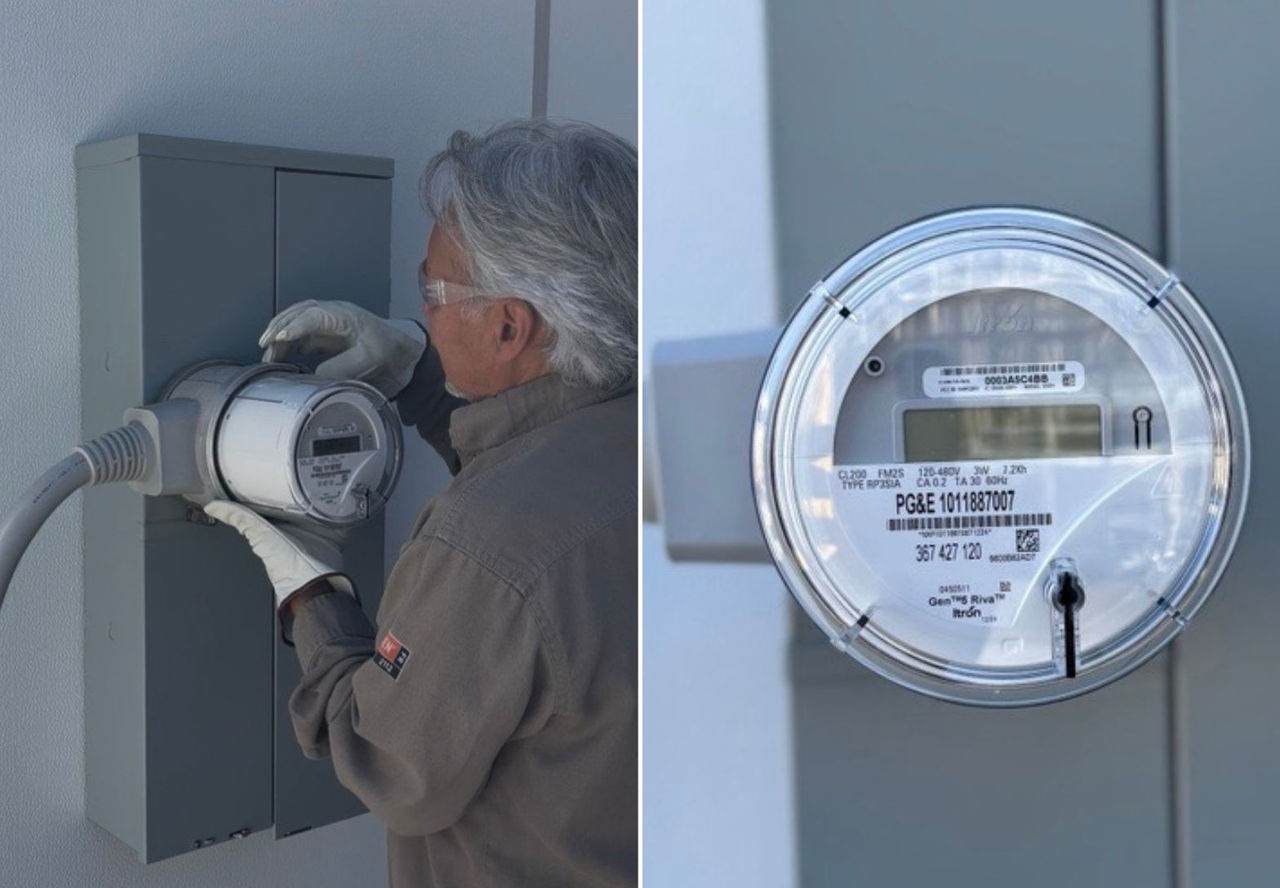
The electric meter on the side of a home or building is becoming much smarter.
PG&E is beginning a phased rollout of next-generation smart meters, also called Advanced Metering Infrastructure, or AMI 2.0. The new technology is designed to improve grid safety and reliability while making it easier and more affordable for customers to use electricity in new ways.
The first phase includes up to 3,000 meters in 2026, with initial deployments in high-fire-risk areas across El Dorado, Lake, Napa, Nevada, Placer, Santa Clara, Santa Cruz, and Tuolumne counties. PG&E will use what it learns to guide future deployments, which could eventually grow to hundreds of thousands of meters if the technology proves effective, cost-efficient and receives appropriate regulatory support.
Finding grid problems faster
Today’s smart meters primarily measure how much electricity customers use. Next-generation meters add computing power at the edge of the electric grid.
The technology can help identify unusual electrical activity sooner, giving PG&E more information to investigate potential equipment problems before they cause outages, respond faster when outages do occur, and reduce wildfire risk.
The easiest comparison is the move from a flip phone to a smartphone. The meter still performs its basic job, but its added sensing and computing power can support new applications over time, from detecting conditions that may lead to faults or create wildfire risk to helping customers add EV charging and electric appliances.
“The next-generation meter is becoming a technology platform for the grid,” said Mike Delaney, vice president of Strategy and Innovation, in a recent interview with Renewable Energy World. “It can give us better awareness of what’s happening on the system, while helping customers add EV charging and electric appliances without costly upgrades. The real opportunity is using that technology at scale to improve reliability, lower costs and make it easier for customers to electrify."
Using smarter meters to spot wildfire risk
PG&E is collaborating with Cambridge, Mass.-based Sense to test how next-generation meters can help detect and locate electrical problems that could contribute to wildfire risk.
Sense software will analyze electrical waveforms from thousands of next-generation meters in high fire-risk areas for patterns that can signal arcing, loose connections, transformer failures and other emerging problems. By comparing data from across many meters, the technology can also help narrow down where a problem may be located.
This new capability will complement PG&E’s Continuous Monitoring Center in San Ramon, Calif. which brings together people, data and advanced machine learning from tens of thousands of sensors installed across PG&E's electric grid, combined with data from its smart meter network consisting of approximately 5.7 million meters that are constantly scanning grid conditions.
By analyzing this data continuously, trained AI models and continuous monitoring engineers can identify emerging issues — well before customers ever notice — and dispatch crews to act on them before they have an opportunity to escalate into unplanned outages or potential ignitions.
That proactive approach is already showing results. Since January 2025, PG&E’s Continuous Monitoring team has prevented 36 ignitions in high fire-risk areas, stopped 2,370 unplanned outages from happening (avoiding 28 million unplanned customer outage minutes), and saved approximately $17 million in operating costs.
The Sense pilot will test whether this application running on next-generation meters can give PG&E another tool to find emerging electrical problems sooner and pinpoint where crews may need to proactively investigate.
Helping customers add EV charging and electric appliances
Next-generation meters can also help customers electrify their homes more affordably.
Through PG&E’s ChargeBoost offering, next-generation meters from Itron enable eligible customers to add faster Level 2 EV charging while staying within the limits of their home’s electrical capacity. The meter and charger work together to adjust charging speeds and avoid overloading equipment at the home or on the local grid.
PG&E’s complementary PanelBoost offering with SPAN extends that idea to electric appliances such as heat pumps and induction stoves.
These technologies can help avoid costly electrical panel, service or grid upgrades while helping PG&E get more capacity from the infrastructure already in place. Traditional panel and service upgrades to support at-home Level 2 EV charging can cost thousands of dollars, with more complex projects exceeding $10,000.
Starting small, learning and scaling
PG&E is taking a phased approach to next-generation smart meters rather than replacing every meter at once.
The first phase includes up to 3,000 meters in 2026, with approximately 10,000 planned through 2027. These early deployments will help PG&E evaluate performance, refine the customer experience and test cost-effectiveness before deciding whether and where to expand.
For customers receiving a new meter, installation is relatively quick and requires a brief planned outage. The upgrade comes at no additional cost to the customer receiving it and, unless there is a meter panel access issue, customers do not need to be home.
The bigger goal is simple: use smarter technology to get more from the grid we already have. Next-generation meters can help PG&E spot problems faster and improve reliability, while giving customers more affordable options to charge an EV, electrify their homes and use new energy tools in the future.