©2026 Pacific Gas and Electric Company
IMPORTANT

Why We Do PSPS: Patrols Find Damage on Circuit That Could Have Led to Significant Wildfire
Date: September 14, 2026
PG&E's Public Safety Power Shutoff (PSPS) program is a measure of last resort, used only when weather conditions create an elevated risk that energized powerlines could spark a wildfire. While power outages are disruptive for customers and communities, post-event reviews often underscore why these difficult decisions are made.
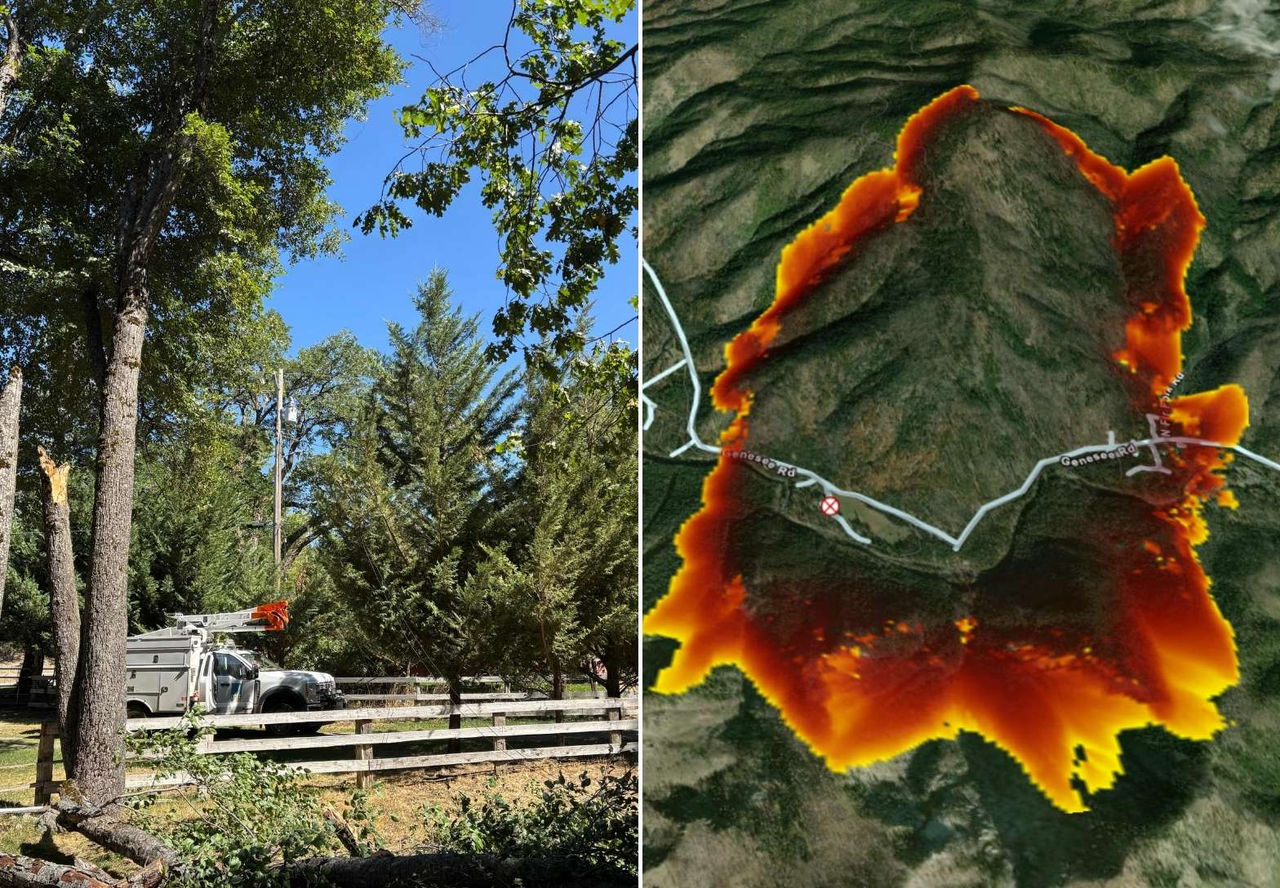
During restoration patrols following the proactive Sept. 12 PSPS event, PG&E crews identified a downed tree branch on the Big Meadows circuit near Lake Almanor in Plumas County, which resulted in conductor damage. The circuit had been de-energized as part of the PSPS before the damage was found, helping reduce wildfire risk during severe weather conditions.
Damage found during restoration patrols
On Sept. 12, PG&E proactively de-energized portions of the Big Meadows circuit as part of the PSPS event, affecting about 4,965 customers.
On Sept. 13, before power was restored, field crews patrolled the line and identified damage.
Early observations indicate vegetation contacted electrical equipment, requiring repairs before it could be safely re-energized.
The circuit runs through forested terrain where fire could spread quickly under the wrong weather and fuel conditions.
Modeling the potential impact
After PSPS events, PG&E reviews damage found in the field to better understand what could have happened if the line had remained energized.
Using the Big Meadows damage location as an example, PG&E modeled how a potential wildfire could have spread under the conditions present during the event.
The model estimated that a wildfire starting at the damage location could have:
- Impacted approximately 676 acres
- Exposed approximately 20 structures to damage
- Resulted in an estimated 7 structure losses
The modeling reflected conditions in the area at the time, including the effect of recent precipitation.
A reminder of why PSPS matters
PSPS is one layer of PG&E's wildfire prevention strategy and is used only when severe weather creates unacceptable wildfire risk. After conditions improve, crews patrol de-energized lines to identify any damage or hazards before power is restored.
At Big Meadows, proactive de-energization meant vegetation contacted electrical equipment on a line that was not energized, reducing the risk of an ignition in fast-burning terrain near nearby communities.
Although no one can know whether an ignition would have occurred, post-event modeling helps illustrate the potential impacts avoided through proactive safety measures.
PG&E recognizes the disruption PSPS events create for customers and communities. Findings like Big Meadows reinforce why PSPS remains a tool of last resort to help protect people, communities and the environment during heightened wildfire risk.