©2026 Pacific Gas and Electric Company
IMPORTANT

Why We Do PSPS: Damage Findings, Extreme Winds and Statewide Fire Preparations Reinforce Need for Safety Shutoffs
Date: October 20, 2026
PG&E’s Public Safety Power Shutoff (PSPS) program is a tool of last resort, used only when weather conditions create an elevated risk that energized powerlines could spark a catastrophic wildfire.
PG&E understands the frustration and hardship caused by power shutoffs. Each PSPS decision weighs the immediate impacts of an outage against the potentially devastating consequences of a wildfire.
That tradeoff can be difficult to see in the moment. Post-event patrols, inspections and modeling, however, can provide important context for why these difficult decisions are made.
Following PG&E’s most recent PSPS event, patrols and inspections identified multiple instances of weather-related damage and hazards that could have had serious consequences if the lines had remained energized. The extreme conditions, field findings and fire-spread modeling help show what was at stake — and why the shutoffs were necessary.
Extreme fire weather across California
From Oct. 14-17, California experienced a significant and unusual statewide fire weather event that saw three simultaneous offshore wind patterns: Diablo winds in Northern California, Mono winds along the Sierra and Santa Ana winds in Southern California. This, combined with critically dry vegetation and low relative humidity, created elevated wildfire risk across an exceptionally large geographic area.
During the event, PG&E weather stations recorded wind gusts as high as:
- 67 mph near Hell Hole Reservoir in Placer County
64 mph near Lebec in Kern County
61 mph near The Geysers in Sonoma County
55 mph near Fellows in San Luis Obispo County
While some customers may not have experienced strong winds at home, PG&E's meteorology team reported that high winds remained present at higher elevations and in fire-prone areas where electrical facilities are located. California's complex terrain can cause significant differences between conditions experienced in valleys and those occurring along ridges and remote portions of the electric system.
State and local agencies also took precautionary action
PG&E wasn’t alone in considering this wind event a significant fire hazard.
Ahead of the event, Gov. Gavin Newsom directed Cal Fire and the California Governor's Office of Emergency Services to pre-position additional firefighters, engines, aircraft and specialized equipment throughout California and placed the State Operations Center into an enhanced state of readiness. The Governor urged residents to prepare for dangerous fire weather and the possibility of utility power shutoffs.
At the same time, the National Weather Service issued Red Flag Warnings across large portions of California, and firefighting resources were strategically positioned throughout high-risk areas in anticipation of potential wildfire activity.
Damage and hazards found during restoration patrols
Before power can be restored after a PSPS, crews patrol and inspect de-energized circuits to identify any weather-related damage that could create a danger if power were restored.
During restoration efforts following the Oct. 14 event, crews reported many separate, weather-related damage and hazard findings across the PSPS footprint. Examples included damaged conductors, broken equipment and vegetation-related hazards discovered only after crews were able to inspect lines in the field.
One example included a broken neutral wire identified during post-event patrols. Because the circuit had been de-energized, crews were able to safely identify and address the issue before restoring service.
Modeling the potential consequences
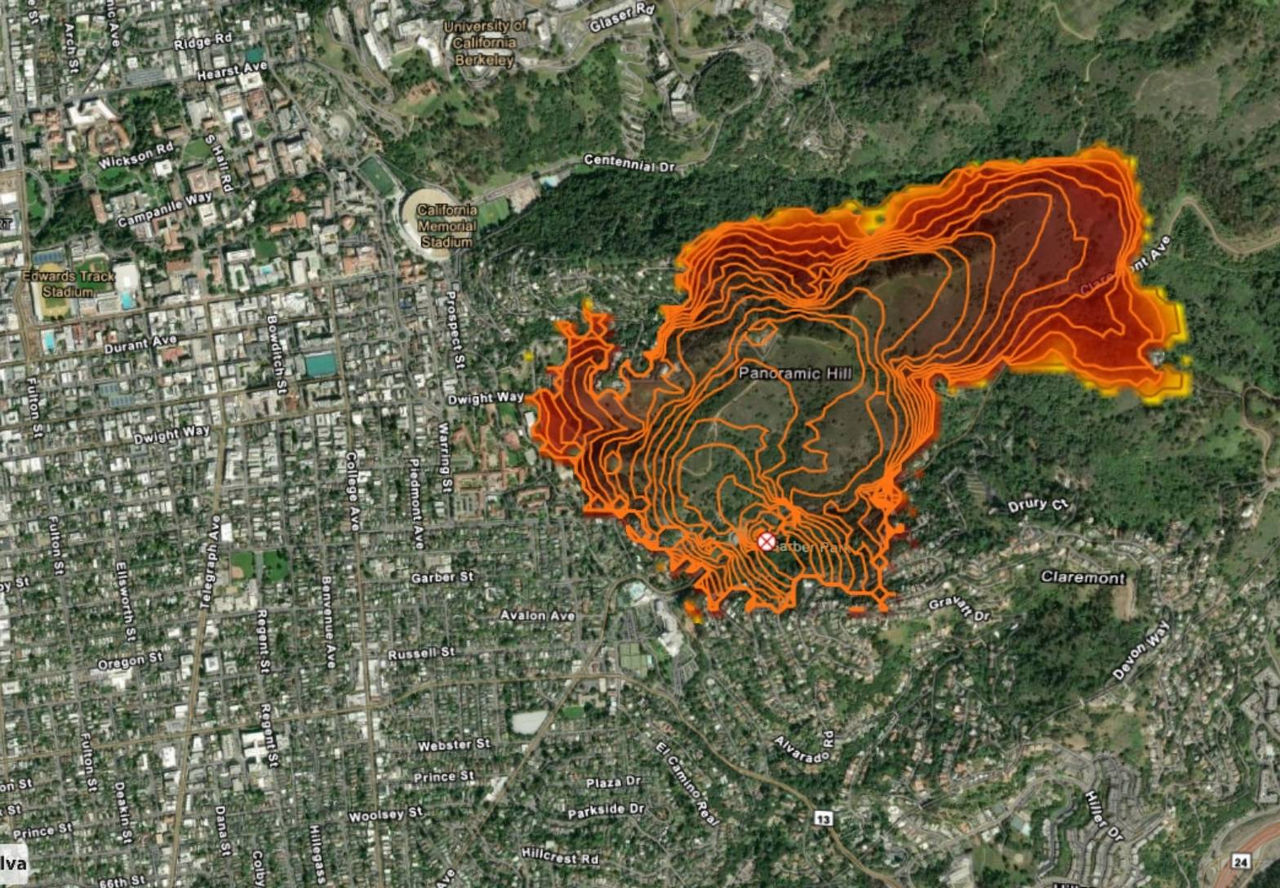
Following significant PSPS events, PG&E reviews field findings and uses fire-spread modeling tools to better understand what could have happened had damaged equipment remained energized during extreme weather conditions.
Using damage locations identified during this event, simulations estimated that potential wildfire ignitions could have resulted in:
A wildfire in the Berkeley area affecting approximately 385 acres, with 116 structures and approximately 249 people exposed
A wildfire in the Castro Valley area impacting approximately 1,600 acres
A wildfire in the Placerville area impacting approximately 2,800 acres
While the model doesn’t account for any fire suppression activities, and no model can predict exactly what would have happened, these simulations help illustrate the potential consequences when damaged electrical equipment, strong winds, low humidity and dry vegetation occur simultaneously.