©2026 Pacific Gas and Electric Company
IMPORTANT

PG&E Unites Agencies to Tackle Battery Fire Hazards and Prepare Crews and First Responders
Date: April 20, 2026
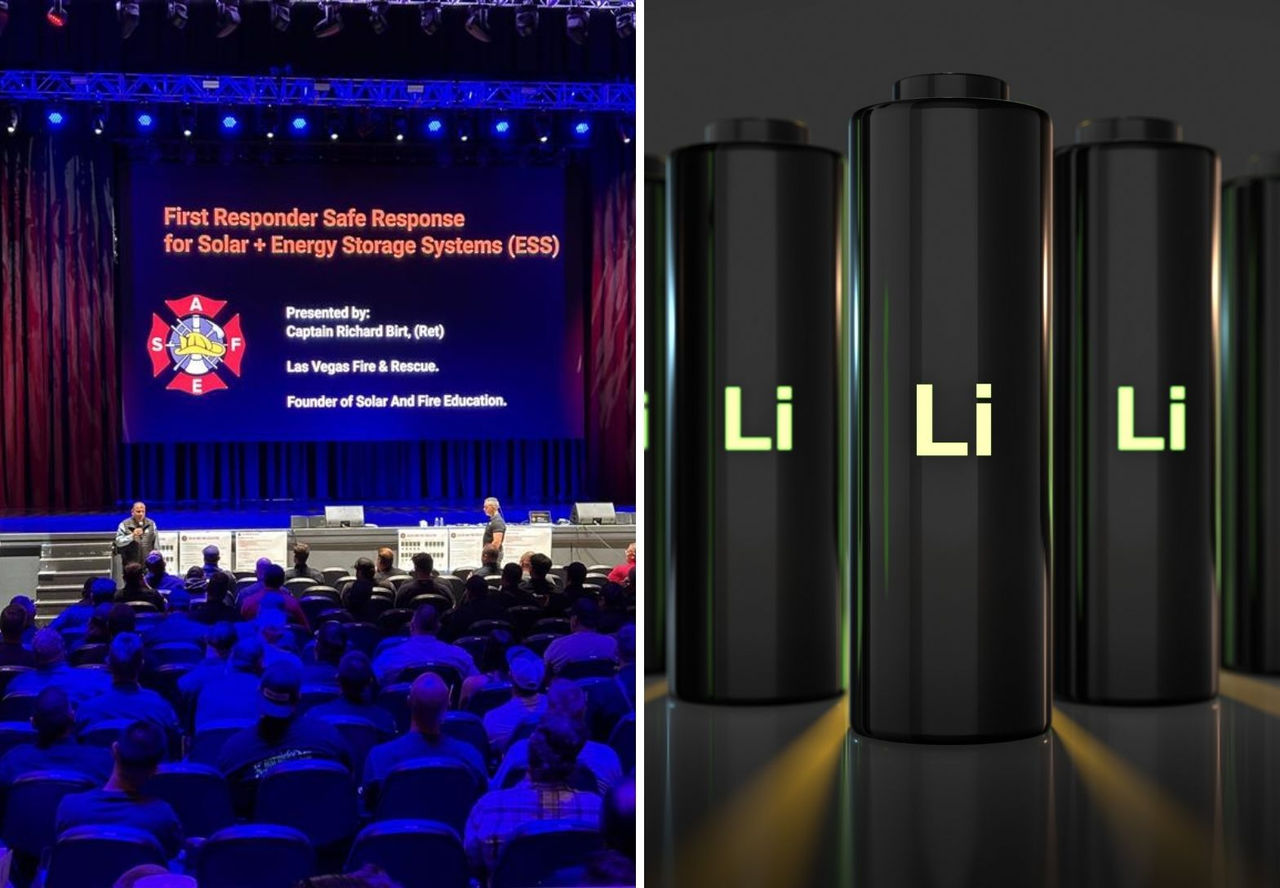
On any busy street in California, you’re likely to pass a Tesla, a Prius, maybe an e-scooter. Firefighters are paying close attention to every single one.
When a fire breaks out, first responders rely on years of training to guide their every move. But as lithium-ion batteries power more electric vehicles, solar panels and homes, those familiar playbooks built around more than 100 years of experience are challenged in one critical area — battery fires. These incidents don’t always behave like traditional fires. In many cases, responders are facing them before they’ve had the chance to train for them.
“We’re dealing with this on a daily basis already,” said Tyler Wagaman, deputy chief of operations for Sacramento Metropolitan Fire District. “But we don’t have the tools or knowledge yet to properly mitigate these types of incidents.”
Partnerships with first responder agencies are essential as PG&E serves and protects its customers. This includes emerging topics such as battery fires. The company made history recently as the first utility in the nation to host a symposium focused on lithium-ion battery safety for first responders. The Placer County event brought together fire agencies, law enforcement and other public safety partners from across the region.
In his opening remarks, Andy Abranches, PG&E vice president, Wildfire Mitigation, said utilities have a role to play. As battery technology grows, helping first responders stay safe is part of the job, he said.
The training was led by Richard Birt. He’s a former firefighter with more than 30 years of experience who now works with departments around the world on battery fire risks. Drawing on field experience, emerging research and no small amount of chemistry, Birt walked attendees through what to watch for when arriving on scene.
Learning on the job — with higher stakes
Lithium-ion batteries are now part of daily life, powering everything from smartphones to electric vehicles. But as their use grows, the training available to first responders is still largely written for the age of the gas-powered car and the rotary-dial phone. The adoption of these new technologies has simply moved faster than the training.
“There’s no single source of training today, and no industry-wide efforts to prepare first responders for these incidents,” said Jeff Millar, director of Wildfire Operations at PG&E. “We saw that gap, and we felt it was something we owed our first responders to help address.”
In many cases, fire departments are learning as they go — responding to incidents first, then building policies and procedures after.
“We’re always in a bit of a reactionary position,” said Wagaman. “New technologies come out, and it’s not until they’re widely used that we start to see the challenges associated with them.”
That dynamic is already playing out across Northern California, where many agencies say they’re seeing more lithium-ion battery and electric vehicle-related incidents.
A different scene requires a different mindset
The training focused on helping responders spot when lithium-ion batteries are involved — and how that changes their approach on scene. That includes knowing how battery systems may connect to solar, where hazards can hide, and when to adjust tactics. The goal was sharper awareness and better decisions under pressure. That matters in an emergency situation. These incidents can release toxic gases, reignite after the fire appears out, and involve power sources that are still live even after the electricity is shut off. They also need more than just the fire service to respond.
“This isn’t just a fire department issue anymore,” said Cal Fire Battalion Chief David Krussow. “Law enforcement, utilities and other agencies are all on scene — and they all need to understand what they’re dealing with.”
When the old rules don't apply
The training reinforced a few key points for how to handle these incidents.
First, recognition matters. Spotting a lithium-ion battery or energy system, whether in a vehicle, home or on the grid, can quickly change how a scene is managed.
Second, slow down before acting. Old tactics don’t always apply here — and in some cases, they increase risk. Taking a moment to read the scene leads to safer choices. In enclosed spaces, this can also mean ensuring proper ventilation before entering. Batteries can release hazardous gases when exposed to heat.
And finally, the job isn’t done when the fire goes out. Like embers in a wildfire that seem cold but reignite hours later, lithium-ion batteries can hold intense heat long after the flames are gone. Crews need to keep watch well after the initial response.
Building a shared foundation
For many in attendance, the day was just the start. The goal is to take what they learned back to their own teams.
“This is just the beginning,” said Chris Mertens, battalion chief and fire marshal with Placer County Fire. “The goal now is to bring this training back to our agencies and expand it across all of our partners”.
The event also offered a look at how other countries are adapting. In the United Kingdom, for instance, tow trucks are using special units to move damaged electric vehicles safely, cooling the battery and cutting the risk of reignition. These tools and techniques are still new, but they show how response methods are growing alongside the technology.
For PG&E, the goal is to keep those talks going, giving first responders and partner agencies a place to share what works and build common ground. PG&E plans to expand the program to more regions, reaching more crews across the state.
“At the end of the day, it’s not just the fire crews who are exposed — it’s every public safety partner on that scene,” Mertens said. “Bringing everyone into the same room, with the same information, is how we keep our people and our communities safer.”