©2026 Pacific Gas and Electric Company
IMPORTANT

PG&E Crews' Fast Response Stops Dangerous Work Near Power Lines
Date: May 27, 2026
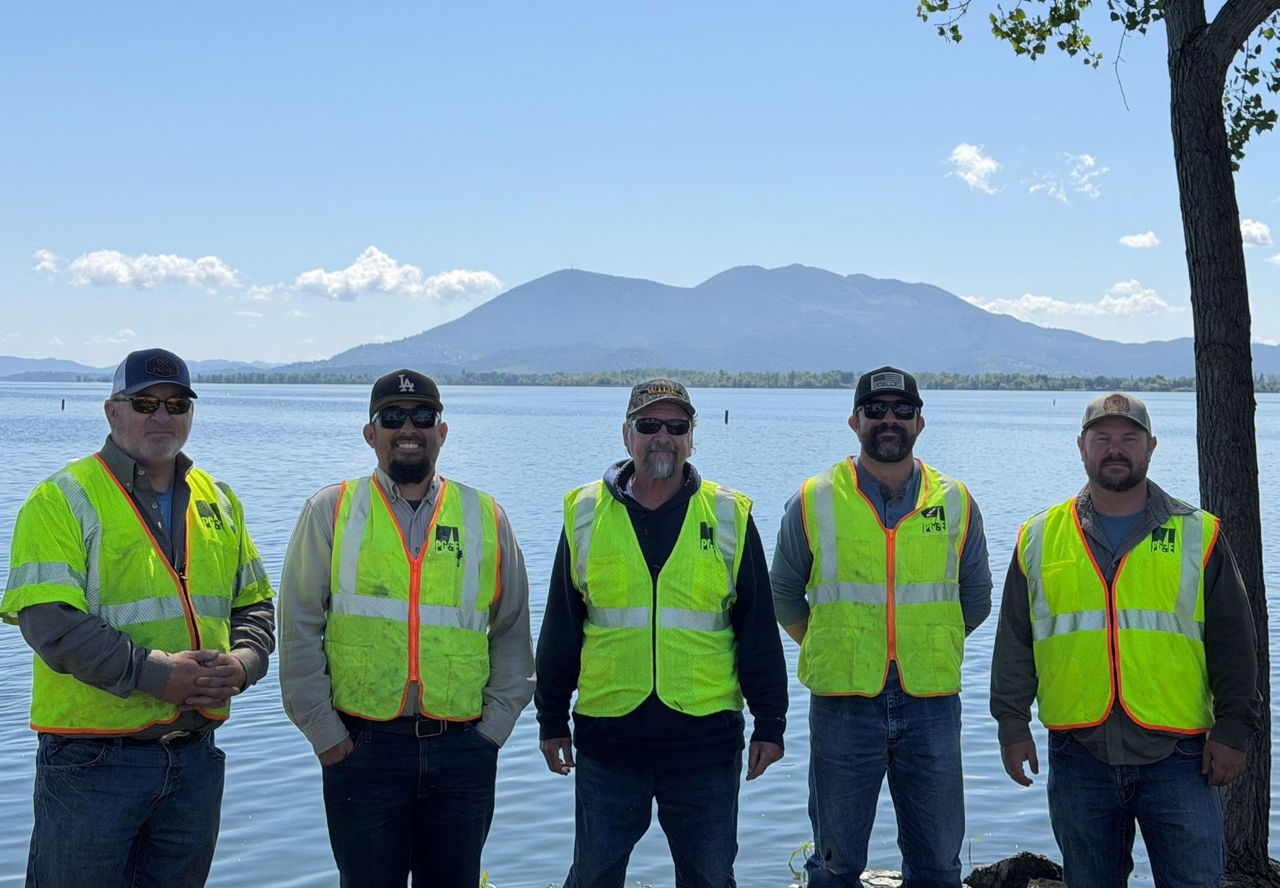
What started as a routine pre-fielding activity in Lake County recently became a strong example of PG&E’s safety culture at work. Alert and decisive PG&E coworkers stopped a non-PG&E job and helped bring a dangerous situation under control.
On March 18, PG&E electric crews were checking field jobs in the Lucerne area of Lake County when they passed a non-PG&E construction crew working along the road. At first, nothing appeared out of the ordinary. But when the PG&E crew came back down the mountain, the situation had changed, and something looked unsafe.
North Coast M&C Coordinator Cid Rojas, who was at the scene, clearly remembered the moment.
“We had driven by the telecommunications contractor crew on our way up and saw they were doing some construction work — just a crew on the side of the road,” Rojas said. “On the way back down, a worker was holding a cable line that was going up and over PG&E distribution lines. We pulled over and took a closer look.”
What the PG&E coworkers found was serious. A telecommunications crew that was not affiliated with PG&E had been pulling fiber-optic cable directly over 12 kV distribution lines.
“There was no question that the line was energized. These are journeyman linemen, and one was a 42-year PG&E employee. He knows what he’s talking about,” remarked North Coast Electric Distribution Supervisor RG Oakley, referring to Electric crew leader Erik Harms, who was on the scene.
Once they recognized the immediate danger, the PG&E team acted right away.
“We parked and kept a safe distance,” Rojas said. “But right away, we knew this wasn’t safe. The fiber cable had come within approximately two feet of the conductor. There was no cover, no grounding and no one was properly protected. We immediately stopped the job.”
“Anytime you roll up on a situation like that, it’s tricky to tell another crew to stand down,” noted Oakley. “But honestly, these guys were going to kill themselves.”
After assessing the risk, the team made another difficult decision: They requested that the circuit be de-energized to remove the hazard. The unplanned outage first affected more than 1,700 customers, but crews moved quickly to reduce the outage to 15 customers. Power was fully restored later that afternoon after the area was made safe.
For Rojas, the experience reinforced a simple but important lesson.
“If you see something that’s not safe, you need to say something. In this case, it was about stopping the work and taking a step back to evaluate. That’s what kept this from becoming something much worse.”
Follow-up discussions showed that the communications crew had not coordinated with PG&E and did not fully understand the risks of working near energized lines.
“To be honest, I believe that the guys realized it was dangerous — just not how dangerous. I’m not sure if they have ever witnessed that effect that electricity can have on asphalt or the human body, but I have," Rojas said.
Harms added additional color. “When we arrived on the scene, the tricky part was that the contractor was holding the cable in his hand and we needed him to step away, but if he dropped it outright, the cable would immediately sag into the energized line. There was also a language barrier. We needed to act urgently but also calmly and strategically.”
Since then, the incident has led to more conversations about improving coordination, training and awareness, both inside the company and with external partners.
“I’m not trying to be dramatic, but these guys saved lives that day — 100 percent, no question,” Oakley said. “Making a call like that—telling other crews to stop work—it can be tough. But safety has to come first.”
North Coast Vice President Dave Canny praised the team’s actions and emphasized the broader impact.
“This is exactly the kind of situation where our coworkers’ situational awareness, expertise and commitment to safety made all the difference,” Canny said. “Their quick thinking and courage prevented what could have been a very serious event. I’m incredibly proud of them for stepping in and doing the right thing.”