©2026 Pacific Gas and Electric Company
IMPORTANT

Five Feet That Can Save Your House
Date: October 09, 2026
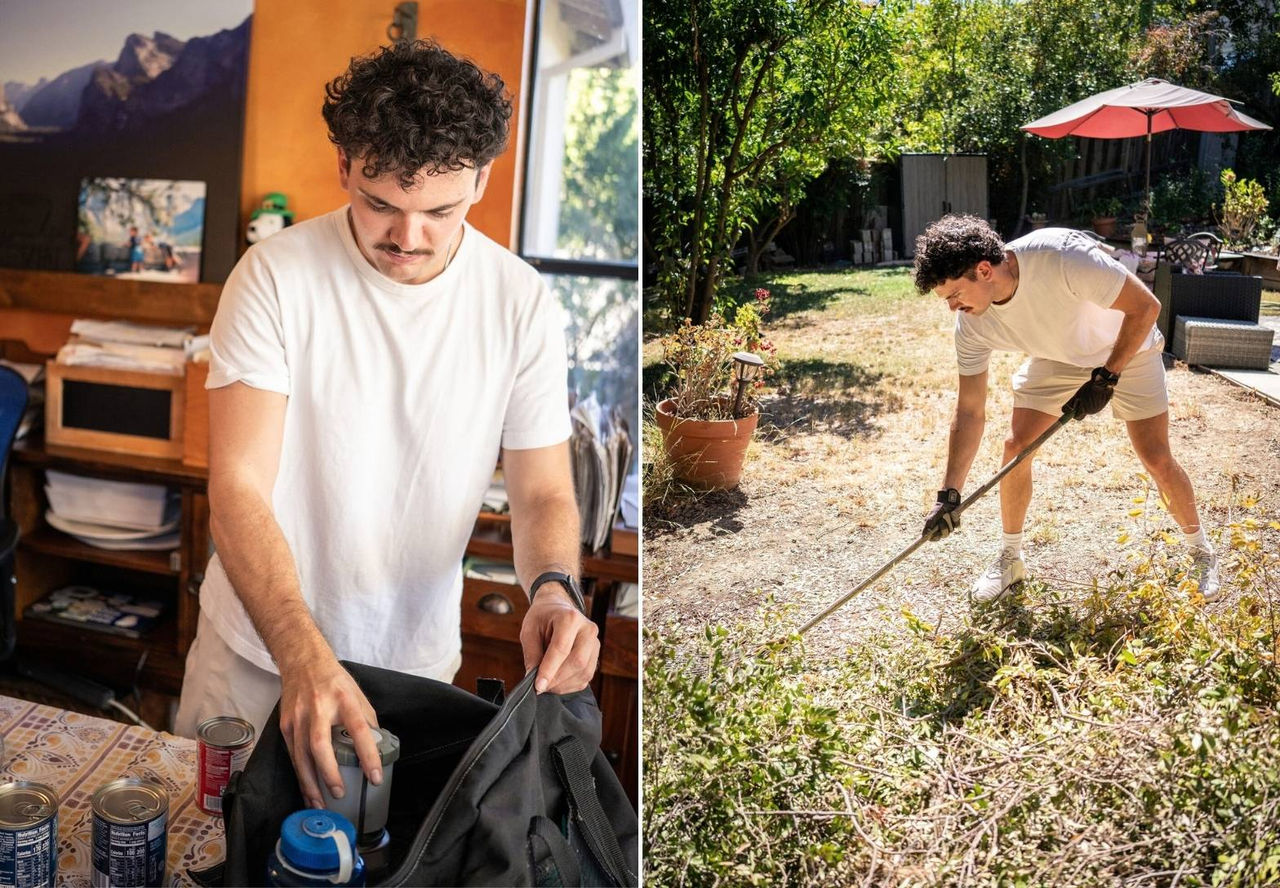
California residents know too well when fire season arrives. As the state grows in population, so does the development of communities in wildland urban interfaces (WUIs). In these areas, urban development overlaps with highly flammable vegetation like forests and heavy brush. Within developed areas lies another, lesser-known danger: ornamental vegetation. That pretty ornamental juniper or Italian cypress that lines the front of many homes is actually a high fire risk.
The dangers of ornamental vegetation
My friend is a wildfire photographer, and he was the first person to make me aware of the dangers of ornamental vegetation. In fast-moving, wind-driven fires, this vegetation can allow wind-blown embers to jump from house to house, rapidly increasing the speed and size of a wildfire.
It can act as an extension of the WUI, allowing the fire to burn deeper and more intensely into urban areas, which typically have low fire danger.
Why a defensible space is important
In an era of increasing wildfire danger, it's more critical than ever to have a defensible space. These spaces have multiple zones, with Zone 0 being the most important. This represents the first five feet surrounding the outside of your house. Keep this zone clear of vegetation and anything that can burn. Instead, use noncombustible materials like gravel, pavers, or rock. Firefighters often say it can make a real difference in whether a home survives.
Even if you have defensible space, your neighbor may not. If their property is surrounded by dense vegetation, it could put the entire neighborhood at greater risk during a wildfire. That’s why wildfire preparedness works best when neighbors work together. PG&E has a helpful guide with steps you and your neighbors can take to create defensible space around your homes.
How to prep your house for fire season
Contrary to popular belief, embers, not the actual fire front of a wildfire, are what cause most homes to burn down. Here are the best practices for prepping your house for fire season:
- Cover chimneys and attic and eave vents with 1/8-inch metal mesh screens to prevent embers from getting in.
- Install non-flammable metal gutters.
- Make sure roofing and siding are noncombustible and fire resistant.
- Seal gaps around eaves and roof edges so embers can't get into your attic.
Nailing down the smaller details in your wildfire-resilience plan is important, too. These are some lesser-known tips I think everyone should follow:
- Back into your driveway during high fire danger days. If you have to leave on short notice, you'll be able to evacuate as quickly as possible.
- Have a paper map in your car and learn your evacuation routes. In case of an evacuation, you should have those memorized.
- Familiarize yourself with the Hi-Lo siren that first responders may sound during a wildfire evacuation.
- Map out evacuation routes with your family and neighbors. You should have at least two exit routes for the best chance of a quick escape.
- Have a go-bag ready with enough food, water, batteries, and critical supplies to last you at least 72 hours. Make sure your friends, family, and neighbors in high fire risk zones do the same.
Your evacuation plan's six p's
The last thing to remember in the case of an emergency evacuation are the six P's. These are the most important items to remember during an evacuation:
- People and pets
- Papers, phone numbers and important documents
- Prescriptions
- Pictures and sentimental items
- Personal computer and important hard drives
- Plastic and paper (credit and cash)
Oftentimes, the most dangerous wildfires can move even faster than evacuation warnings are issued. If you feel in danger, evacuate your home, even if evacuation warnings have not yet been issued. It's better to leave early than be stuck in heavy traffic during a quickly moving wildfire. You can create and download your own emergency plan on PG&E's site.
Why wildfire safety is more important than ever
It is more important than ever to develop your personal wildfire safety plan.
As a weather analyst, I've watched California see a noticeable rise in extreme fire behavior, including fire clouds, formally known as pyrocumulonimbus clouds, which form due to the intense heat of wildfires. These clouds can generate their own weather, like lightning and unpredictable winds. It's a good reminder that fire conditions can change quickly, which is why preparing ahead of time matters so much.
At the same time, wildfire season is becoming longer every year in California. The latest research shows that it is now starting earlier than ever before. On average, it begins one to two months earlier in Central and Northern California than it did in the 1990s. Today, the best thing we can do is prepare before the next fire starts.
If you want to learn more about how to prepare for wildfire season, explore the resources in PG&E's Safety Action Center.
Based in San Carlos, Colin McCarthy built one of the largest independent extreme weather platforms while still studying environmental policy and climate science. His journalism has been cited by outlets from The Washington Post to ESPN, and his recent collaboration with PBS on the Camp Fire documentary demonstrated his ability to translate complex climate science into accessible public storytelling.