©2026 Pacific Gas and Electric Company
IMPORTANT

The Grid Is Growing, and That's Good News for Your Bill
Date: March 04, 2026
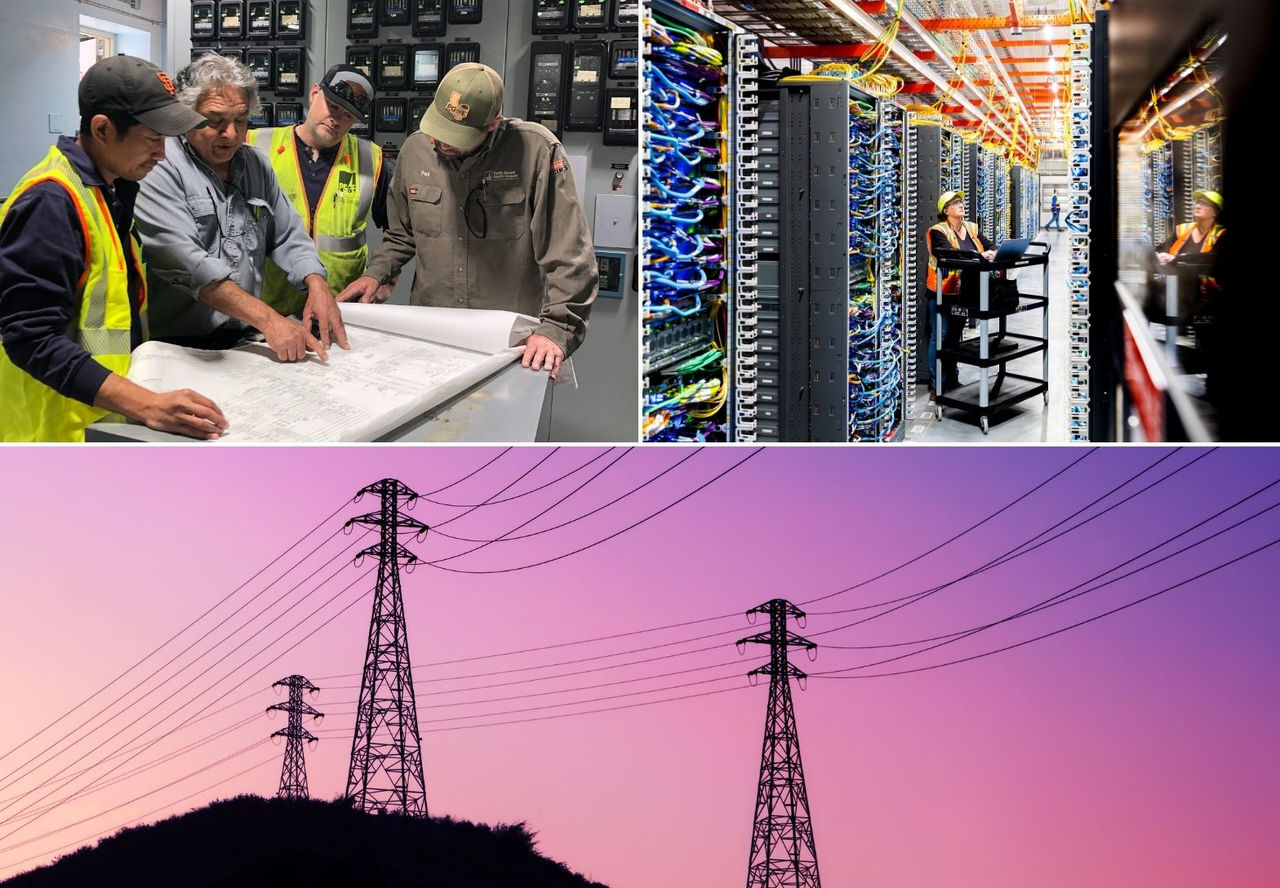
When most people think about the electric grid, they picture power lines, substations, and the flip of a light switch. They don't usually think about researchers, tech companies and engineers sitting in a room together, working to make that switch work better and cost less.
But that's exactly what happened on Feb. 26 in San Ramon as PG&E and Purdue University's College of Engineering co-hosted the third Grid of Tomorrow Consortium event at the San Ramon Valley Conference Center.
More than 200 utility leaders, academics, grid companies, regulators and customers came together to meet the challenges of our time: how to embrace surging electric demand while enhancing reliability and affordability for customers.
Why now, and why it matters to you
Electricity use in California and across the country is growing faster than it has in the past few decades. Data centers, EV charging stations, and manufacturing facilities are all coming online and connecting to the grid at once. The numbers are striking: data centers that once needed the power of a small town now require energy on the scale of a small city.
This might sound like a recipe for higher bills. But here's the counterintuitive truth: when more customers share the same infrastructure, the fixed costs of maintaining it (power lines, substations, transformers) get spread across a larger base. This can drive costs down for everyone.
PG&E has lowered electric rates five times since 2024, including a reduction that took effect March 1. Under the right conditions, PG&E forecasts that each new 1 GW of data center load could reduce electric rates by 1–2% by spreading fixed grid costs over more usage.
"There's something special about bringing this broad set of constituents together," said Joe Bentley, senior vice president of Electric Engineering at PG&E, who opened the event. "When we ask instead of tell — and bring in this collective wisdom — we accelerate the journey for everyone. And that journey leads to a more affordable, reliable grid."
What the consortium is and how it works
The Grid of Tomorrow Consortium is a collaboration between PG&E and Purdue's College of Engineering. Its mission is direct: to catalyze research and workforce development to address the challenges of a rapidly changing energy landscape. Unlike traditional academic partnerships, the consortium is built for speed. Joint research projects move from concept to launch on a three-month inception-to-start timeline.
The consortium also gives consortium members access to Intellectual Property licensing rights on research outputs. This means the innovations developed don't just stay in academic journals. They get commercialized and applied to real-world grid challenges.
Who was in the room
The event brought together a wide cross-section of the energy ecosystem under one roof. Grid operators from CAISO and MISO sat alongside engineers from Tesla, Schneider Electric, NVIDIA, GE Vernova and Intel.
Researchers from Purdue shared findings with large load developers and battery storage companies. The North American Electric Reliability Corporation (NERC) joined panels on system adequacy alongside PG&E transmission and substation engineers.
“Utilities are not actually designed to be nimble and to move quickly,” she said. “They’re designed to be thoughtful and engineering-based, and to make slow changes," said Indiana Secretary of Energy and Natural Resources Suzanne Jaworoski. "But with this disruptive economy right now, utilities are now moving quickly to build services.”
No single entity can do this alone
What made the consortium's third annual event notable wasn't just the size of the room. It was the composition of the room. Every stakeholder who touches the grid was represented.
“Education and collaboration will help us build our digital infrastructure and leverage the opportunities for energy, not just each state, but for our entire country. Let’s all work together to do that," Jaworowski said.
This is why PG&E sees this kind of collaboration not as an occasional event, but as a strategy for delivering on its promise to the customers it serves across California: safe, reliable, affordable energy.