©2026 Pacific Gas and Electric Company
IMPORTANT

Report Shows How We're Building a Safer, Cleaner, More Resilient Future
Date: July 29, 2026
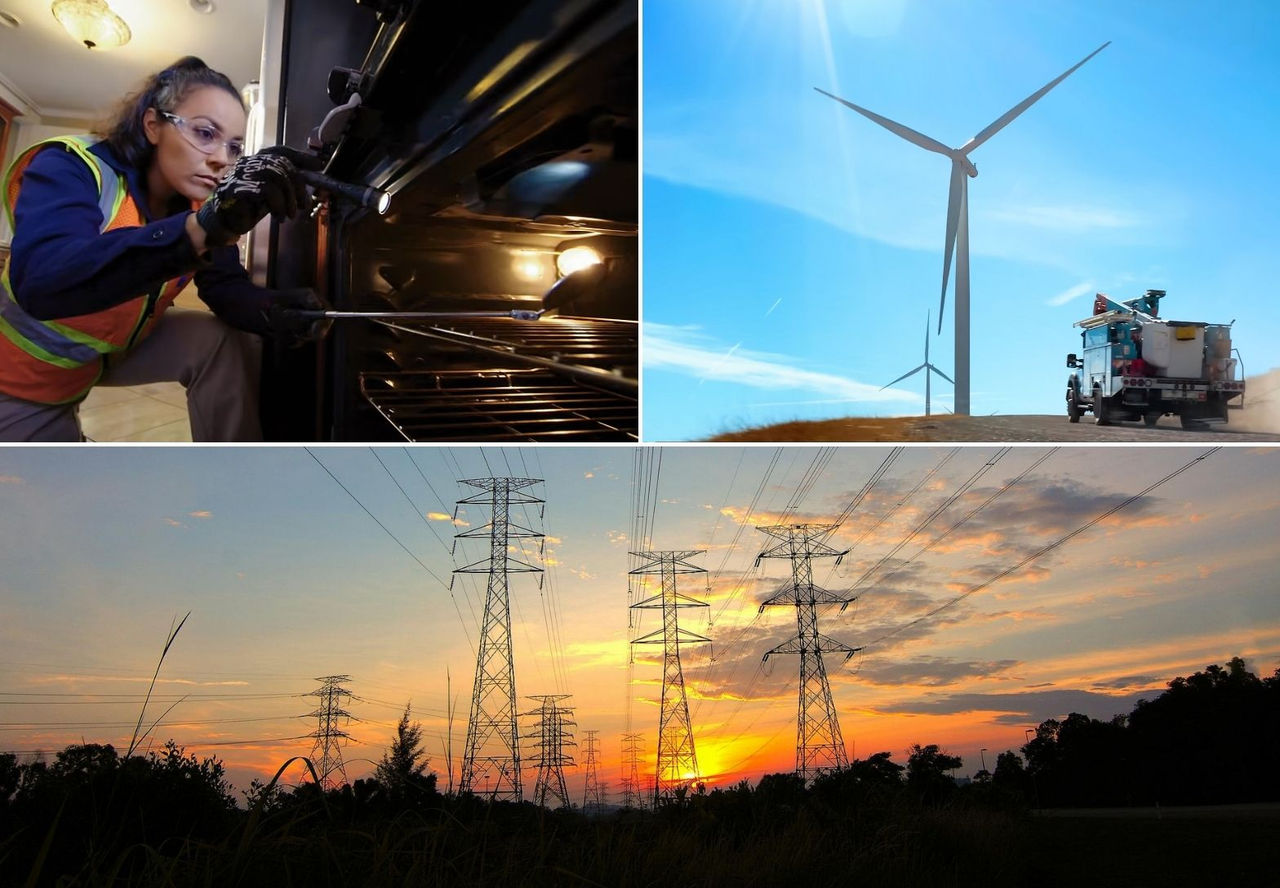
Every year, PG&E puts together a report of dollars invested, miles of powerlines buried, tons of emissions cut. It's easy for a report like that to feel like homework. But behind every one of those numbers is a coworker who showed up to do the work, often in collaboration with partners. This year's Corporate Sustainability Report is really a story about them.
"Today, our progress is proof that love works," said Patti Poppe, CEO of PG&E Corporation. "We are serving our triple bottom line of People, our Planet, and California's Prosperity as we deliver safe, reliable, affordable, and clean energy to our customers."
She was also clear that the work isn't finished. "We're not done yet," Poppe said. "We're working hard to lower our customer bills, we're expanding system hardening with overhead and underground powerlines, and we're embracing innovation to keep costs low and reliability high even as we meet our customers' growing demand for energy."
Progress made last year
These numbers tell a real story about where the company put its energy and focus in 2025.
On safety and reliability, PG&E invested $11.8 billion in capital improvements to upgrade infrastructure across safety, reliability, decarbonization, and wildfire mitigation. Part of that work included burying 334 miles of powerlines in high fire-risk areas, one of the most effective tools the company has for reducing wildfire risk. When customers reported a gas odor, crews responded in 19.8 minutes on average, beating the company's own goal for the year.
On clean energy, PG&E supplied 72% greenhouse gas-free electricity to the residential and business customers it sells power to directly, and it increased battery energy storage contracts to more than 4.9 gigawatts of capacity. Across Scope 1, 2, and 3 emissions, the company achieved a 23% reduction compared to a 2015 baseline, beating its annual emissions goal on the path to net-zero.
On affordability and community engagement, more than 50,600 income-qualified households received weatherization work, energy efficiency upgrades, or new appliances through the Energy Savings Assistance Program. Another 1.39 million income-qualified customers received a monthly bill discount through the CARE program. And together, PG&E and PG&E Corporation Foundation gave $36.6 million to nonprofits and schools, while coworkers logged about 53,000 volunteer hours, more than the year before.
It would be easy to stop there. Aaron Johnson, senior vice president of Local Customer and Community Engagement and PG&E's Chief Sustainability Officer, framed the report as a starting point rather than a finish line.
"While this report shows the substantial progress we're making, we know we have more work ahead to further weave sustainability into the fabric of PG&E," Johnson said. "We welcome your feedback and partnership as we continue our journey."
That's the point of this year's theme:
Every mile of buried powerline was buried by a real crew.
Every household that got weatherization help was visited by a real technician.
Every gigawatt of battery storage represents real engineers solving a real problem.
Behind the numbers: Stories that bring the report to life
Some of the most interesting parts of the report aren't statistics. They're the stories behind them.
One example is PG&E's own electric fleet. By the end of 2025, the company was operating more than 1,400 electric-based vehicles, ranging from hybrid-electric bucket trucks to fully electric vehicles. During the year, PG&E deployed 255 additional EVs, tested electric pickup trucks for gas service representatives and expanded workplace charging across more than 100 locations. It's a reminder that the clean energy transition isn't happening somewhere else. It shows up in the vehicles that coworkers drive every day to serve customers.
The report also highlights a remarkable environmental milestone in Sunol Valley. After years of planning and collaboration, PG&E relocated a gas pipeline that had been the final major barrier to fish passage in Alameda Creek. The project reopened more than 20 miles of high-quality stream habitat and helped migrating Chinook salmon return upstream for the first time in more than 70 years. The salmon’s return signals the potential for broader ecological recovery across the watershed.
Innovation is also taking shape in communities across Northern California. PG&E worked with The Mobility House to launch one of California's most advanced vehicle-to-grid electric school bus fleets for Fremont Unified School District. The Fremont fleet is the second in a growing number of electric, bi-directionally capable e-bus fleets in the PG&E service area. At the same time, PG&E is helping customers electrify their homes by making it easier to add EV chargers, heat pumps and electric appliances through new programs and partnerships, upgraded meter technology, and smart panel solutions that can reduce the need for costly electrical panel upgrades.
Together, these stories show what the numbers in the report mean: coworkers solving problems, partnering with communities, and building a more resilient future, one project at a time.