©2026 Pacific Gas and Electric Company
IMPORTANT

How PG&E Is Powering California’s Data Center Future — Differently
Date: October 05, 2026
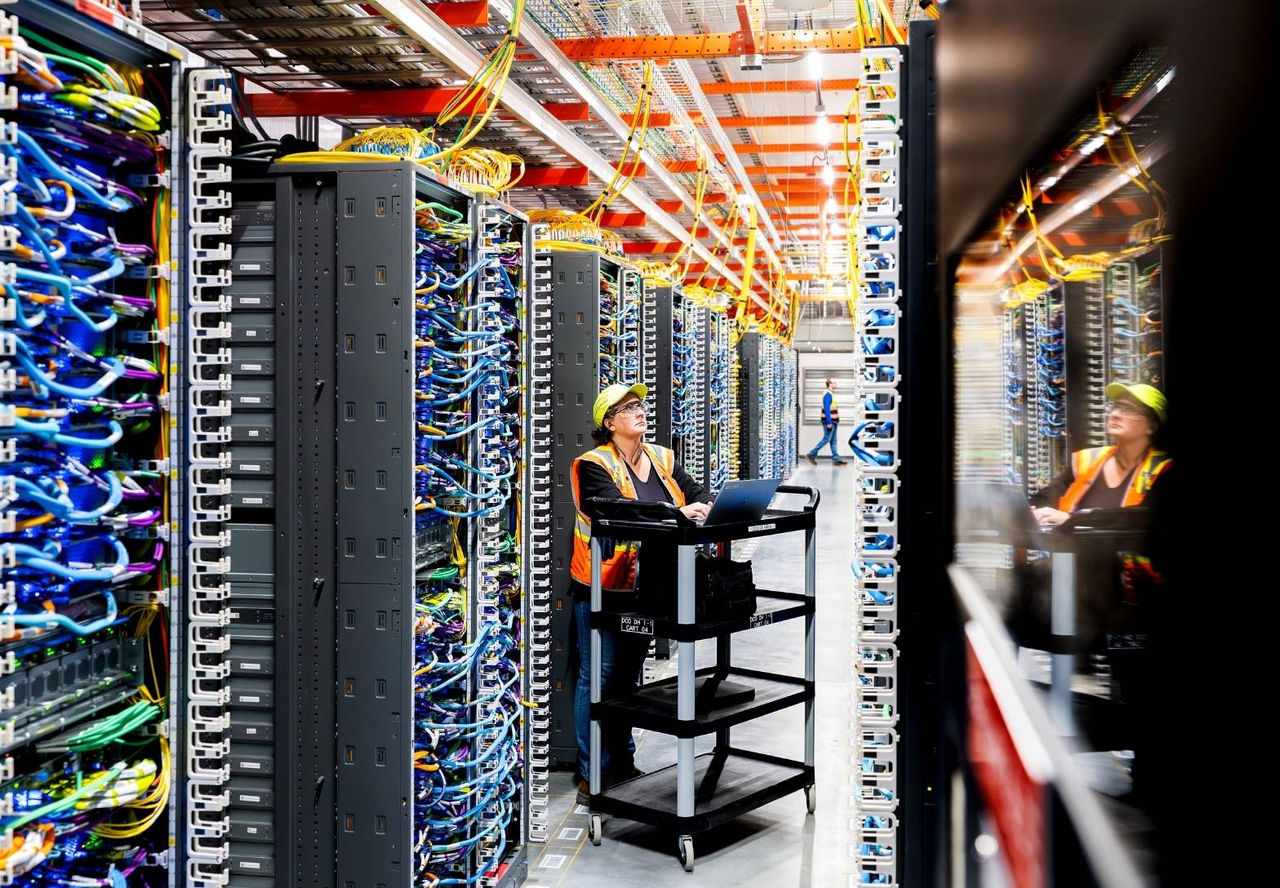
The United States is seeing its largest growth in power demand in decades. Much of it comes from the systems behind cloud computing, AI and other advanced technology. California now has a challenge and an opportunity: power this growth quickly and reliably while keeping costs in check and meeting the state’s clean energy goals.
For data center developers, getting power fast is a major concern. Cost still matters, but it is not the only factor. Strong sites also need open grid capacity, a clear connection process, nearby customers and skilled workers, flexible operations, and large amounts of clean energy.
California has more to offer than many people think. Northern California already has customers, workers, fiber networks, clean energy and a strong technology sector. PG&E’s job is to prepare the grid for new demand and connect projects in ways that also work for current customers.
That means finding where capacity is open now, making connections simpler, investing where growth is firm and allowing projects to start in flexible stages. The goal is not just to serve more power demand. It is to use the grid better, support lower costs, protect reliability and keep California a center of innovation.
Our grid has room and that helps customers
One of California’s biggest strengths may be a surprise: PG&E’s grid has open capacity today. The grid was built to handle the times when demand is highest. Most of the time, it uses about 40% to 45% of its capacity. As a result, some parts of PG&E’s service area can add 50 to 100 megawatts of demand by using equipment already in place.
This does not mean every project can connect at once or in any location. But projects in areas with open capacity may move faster than developers expect. PG&E is working with developers early to find those areas. At the same time, the company is planning the power line and substation upgrades needed for future growth.
Speed and certainty matter as much as cost
Across the country, the time needed to get power is slowing data center projects. PG&E aims to reduce this concern by finding capacity that can be used soon, making studies simpler and planning earlier. This can help developers move from a proposal to an active site with more confidence.
Large customers can also help current customers when they connect to parts of the grid with open capacity. Data centers use power at a steady level. Their payments can spread the fixed cost of running the grid across more customers. Under the right conditions, PG&E estimates that each 1 gigawatt of new demand can lower bills by about 1%. PG&E calls this rate-reducing load growth.
A Stanford University Bits & Watts Initiative roundtable on AI power demand reached a similar point. It said lower costs and customer value must stay top priorities. It also urged utilities to use current capacity when possible, plan investments with care and show customers clear benefits.
Protections for current customers
The benefits are not automatic. They depend on open capacity and careful planning. PG&E’s connection process includes steps meant to protect current customers:
- Many data center projects in PG&E’s area are 100 megawatts or smaller. Some can use equipment already in place.
- Under interim Rule 30, large customers that connect to the transmission system pay upfront for the equipment their projects need. Regulators are still reviewing the final rules for refunds and sharing costs.
- Refunds depend on projects coming online and producing revenue. This lowers the risk that current customers will pay for projects that are never built.
PG&E does not decide on its own how much demand to expect or which major power projects to build. Independent planners and regulators review those choices. Plans can change as demand estimates change. The aim is to invest where growth is real and avoid equipment that is not needed.
Customers can benefit when new demand connects in the right places, under fair rules and with plans based on real demand.
Real benefits for communities
Data centers do more than use large amounts of power. When planned well, they can bring jobs, tax money, new investment and long-term business activity to their communities.
A typical 40-megawatt site can:
- Create nearly 700 construction jobs, including work for skilled trades and local firms.
- Support 135 permanent jobs in operations, maintenance and site services.
- Produce $5 million to $7 million in property tax revenue each year. That money can support schools, public safety, roads, parks and other services.
- Add $10 million to $20 million in sales tax revenue for city and county services.
Communities that host new equipment should see clear benefits. PG&E’s role is to connect data centers in ways that protect current customers, support reliable service and encourage local investment.
Planning for real demand
Interest in PG&E’s area is growing fast. The company’s data center pipeline rose from about 5.1 gigawatts at the end of March to about 12.7 gigawatts on June 30. This shows that companies are taking Northern and Central California seriously.
Still, a pipeline is not the same as firm demand. Of the 12.7 gigawatts:
- About 8.2 gigawatts is still in the early application or first design stage.
- About 3.9 gigawatts is in final design. At this stage, developers have made a stronger promise through work agreements.
- About 490 megawatts has signed construction agreements for grid connections.
- About 140 megawatts is now being built.
PG&E does not assume every request will become a finished site. It must move fast when projects are ready, but avoid two costly mistakes: building for projects that never happen or waiting too long where demand is becoming firm.
PG&E expects to serve about 1.8 gigawatts of new data center demand by 2030. The key is to match each investment with the projects, locations and dates most likely to move ahead.
To do that, PG&E uses:
- Better demand forecasts for electric vehicles, AI, data centers, electric buildings and advanced factories.
- Step-by-step project reviews that separate early interest from firm business and design plans.
- Group studies for nearby projects, which show demand in a full area instead of one request at a time.
- Plans that get more from current equipment before adding new equipment.
Turning flexibility into an advantage
Flexible connections can help PG&E move faster without building too far ahead of real demand. The company has worked on this approach for years. Its programs include Flex Connect on local power lines and T-Flex on large transmission lines.
A flexible connection may let a site start in stages. A customer may need a large amount of power in the future but much less on its first day. PG&E can work with that customer on a step-by-step increase while larger upgrades are built.
Customers may also be able to shift or cut power use when demand on the grid is highest. This can support reliable service, lower costs over time and speed up access to power. It gives developers more ways to grow and helps PG&E manage demand without forcing every project into the same schedule.
Building smart, not just building more
Over the next five years, PG&E plans to invest more than $203 billion to meet rising power demand from data centers, electric vehicles, electric buildings and other sources. The company will also keep improving service for current customers. But not every need calls for a new power line, substation or large building project.
PG&E is investing where the grid must grow. It is also using new tools to get more from the grid already in place.
This matters in San Jose, where power demand is expected to almost triple over the next 10 years. PG&E is preparing to invest $2.4 billion in South Bay power lines and local grid upgrades. The goal is to build in the right places at the right time without adding costs that customers do not need.
Technology can speed up this work. At the Los Esteros substation, SmartValve devices will guide power to lines that have room. This can add more than 100 megawatts of capacity without a major new construction project. The larger plan is simple: open capacity where possible, build where needed and keep projects moving while long-term upgrades are completed.
Putting reliability first
Growth only works if the grid stays reliable for current customers and communities. That is why PG&E is improving the current system as it connects new demand. In San Jose, upgrades made in 2025 cut outage time by 20%. This shows that focused work can improve service now and prepare for future needs.
The work includes:
- New and improved transformers, substation equipment and other grid parts.
- Automatic switches, including a system called FLISR, that can quickly separate a damaged part of the grid so fewer customers lose power.
- Focused checks, repairs and stronger equipment to prevent outages.
- Work with large customers to manage power use and use backup resources when grid demand is high.
Moving forward together
More power demand does not have to work against California’s climate goals. If planned well, growth can help pay for grid upgrades, clean energy and tools that manage demand. If data centers are not built on California’s cleaner grid, they may be built in places with higher emissions.
Many data center operators aim to use carbon-free energy every hour of every day. California’s cleaner grid and PG&E’s growing supply of renewable and carbon-free power can make that goal easier to reach here than in many other regions.
- PG&E is working with customers and local partners on options such as:
- Shared heating and cooling systems that can make large campuses use less energy.
- Microgrids and power resources at the site that improve reliability.
- Flexible connections that let customers start in stages.
- Tools that cut power use during peak times and lower emissions over time.
PG&E aims to reach a net-zero energy system by 2040. Demand growth is not simple. Growth, clean energy and fair costs must be planned together.
Meeting the moment
California must answer a practical question: How can it power the next wave of digital growth while making the grid stronger and more affordable for everyone?
PG&E’s plan is to use open capacity, invest where the grid must grow, let projects start in flexible stages and avoid costs that are not needed.
Developers may choose California for fast access to power, nearby customers, skilled workers or a cleaner grid. More often, it is the mix of these strengths that makes the state a strong choice. PG&E’s role is to turn those strengths into real projects, customer savings and community value.
For developers, the best next step is to talk with PG&E early. The sooner PG&E knows a project’s location, size and growth schedule, the sooner it can find open capacity, study a flexible connection and start any needed grid work.
That is how California can turn rising demand into an opportunity: by building a grid that is stronger, more affordable, cleaner and ready for what comes next.