©2026 Pacific Gas and Electric Company
IMPORTANT

Four Hundred People, One Mission: Preventing Wildfires
Date: June 18, 2026
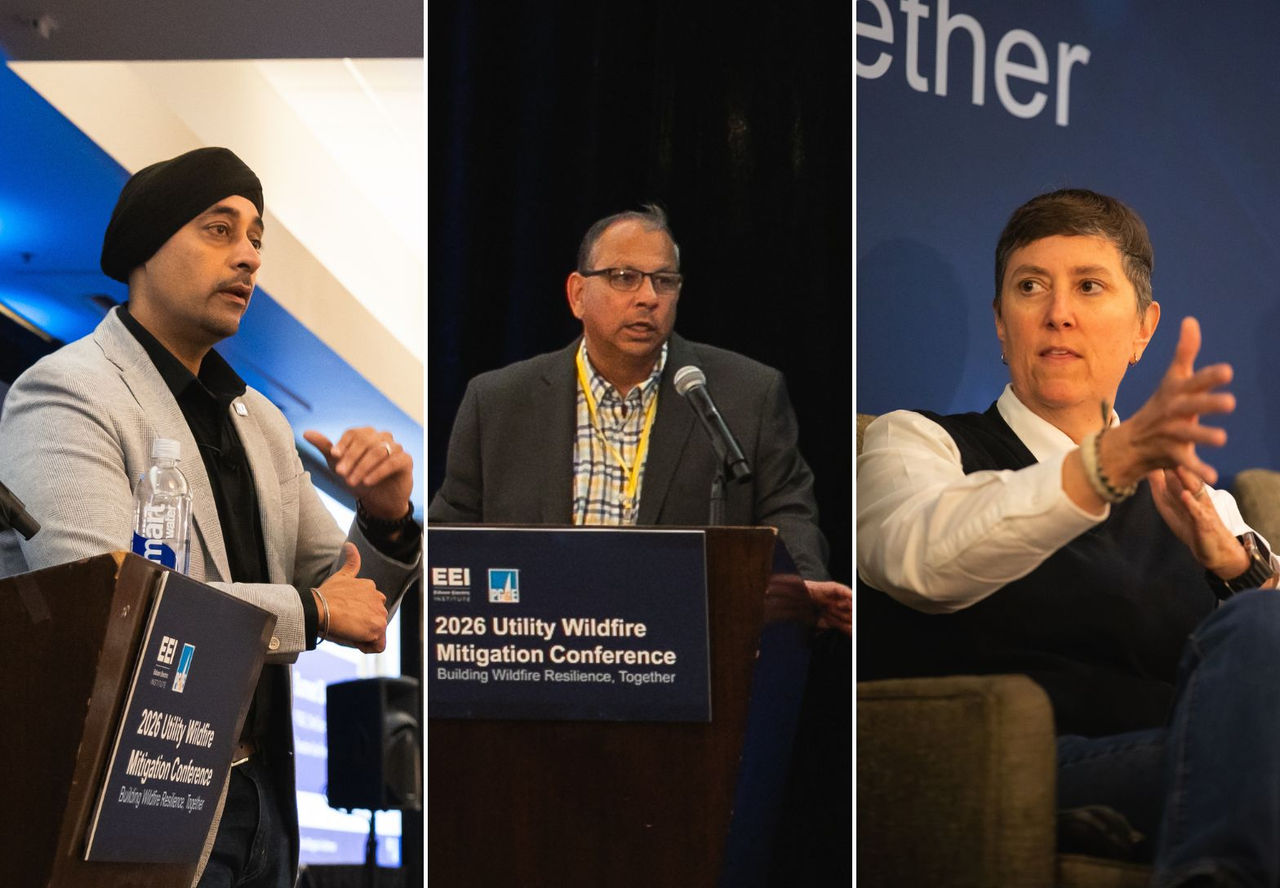
"I don't even refer to it as fire season anymore," said Mark Quinlan, PG&E's Senior Vice President of Wildfire, Emergency & Operations. It was his message to a room packed with utility leaders, government officials and technology innovators. "I just refer to it as Fire Year 2026."
That message captured the urgency behind PG&E's annual Wildfire Mitigation Conference, co-hosted by Edison Electric Institute. PG&E Vice President of Wildfire Mitigation Andy Abranches launched the conference in 2024 with a simple idea: Get the right people in the room. Now in its third year, the event is growing right alongside the threats it was built to address. Nearly 400 people showed up this year, including 50 utilities. Together, they took part in hands-on sessions, technology demonstrations and site visits.
PG&E Utility CEO Sumeet Singh opened with a moment of silence for the lives lost to wildfires. It set a tone of purpose and urgency for the days ahead.
"It's inspiring to see this room full of people from different walks of life, not just utilities, but innovators, researchers, state and federal leaders," Singh said. "It takes a collective us to solve this generational challenge."
That spirit of collaboration was reflected throughout the conference. One of the first panel discussions focused on the importance of utilities partnering with key leaders to build more wildfire-resilient communities. That was just the start of Day One, which also included working sessions on topics ranging from meteorology and fire science to vegetation management.
A central theme this year was how quickly technology is changing wildfire prevention. More than 20 companies were on site to show what that looks like in practice, as part of a Partner Expo. Those companies included AI Dash, ALERTWest, Planet Labs, Technosylva, Overstory, Watch Duty and BurnBot.
Speakers also highlighted how AI and machine learning are helping teams spot potential issues earlier. The discussion built on momentum from the launch of PG&E's recent Continuous Monitoring Center. It's a hub where data and sensors help the company get ahead of problems before they grow.
Ignition data and trend analysis also emerged as a growing priority. Abranches emphasized their role in helping utilities measure whether mitigation strategies are actually working — not just whether they're being deployed.
Cal OES Director Caroline Thomas Jacobs reflected on how far the industry has come.
"There was a time when it was just 10 of us thinking about this problem, and now we've got 400," she said.
It's a sentiment Abranches echoed throughout the week.
"One of the biggest takeaways this year is that utilities are not alone in this work," Abranches said. "There are more tools, resources and tested mitigations available than ever before."
Looking ahead, Abranches said the conference will continue to grow. He envisions it one day moving beyond PG&E's backyard. His hope is that utilities across the country will take turns opening their doors. The more voices at the table, he said, the better.