©2026 Pacific Gas and Electric Company
IMPORTANT

The Deep Dive into Dam Data That Earned a PG&E Engineer National Recognition
Date: June 25, 2026
Growing up in the Bay Area, where landmarks like the Golden Gate Bridge and Bay Bridge define the skyline, Hannah Curran assumed she’d one day help design bridges of her own.
Then she took a geotechnical engineering class at UC Davis.
Instead of bridges, she found herself fascinated by something much less glamorous: soil.
“I realized, ‘Oh, soil is interesting,’” Curran said with a laugh.
That unexpected discovery changed the course of her career.
Like many engineering students, Curran entered college with a general idea of where she wanted to go. But geotechnical engineering – the branch of engineering focused on soil, rock, geology, and the ground beneath our infrastructure – offered something she hadn’t expected.
“It felt like a puzzle,” she said. “You have to be okay with nuance and try to find trends. I was intrigued by the challenges it presented, and the creativity required to master it.”
After graduate school at UC Davis and five years in geotechnical consulting, Curran joined PG&E’s Geosciences team in 2021. Her work focuses on dam safety and hydroelectric operations.
That puzzle-solving mindset recently led to national recognition.
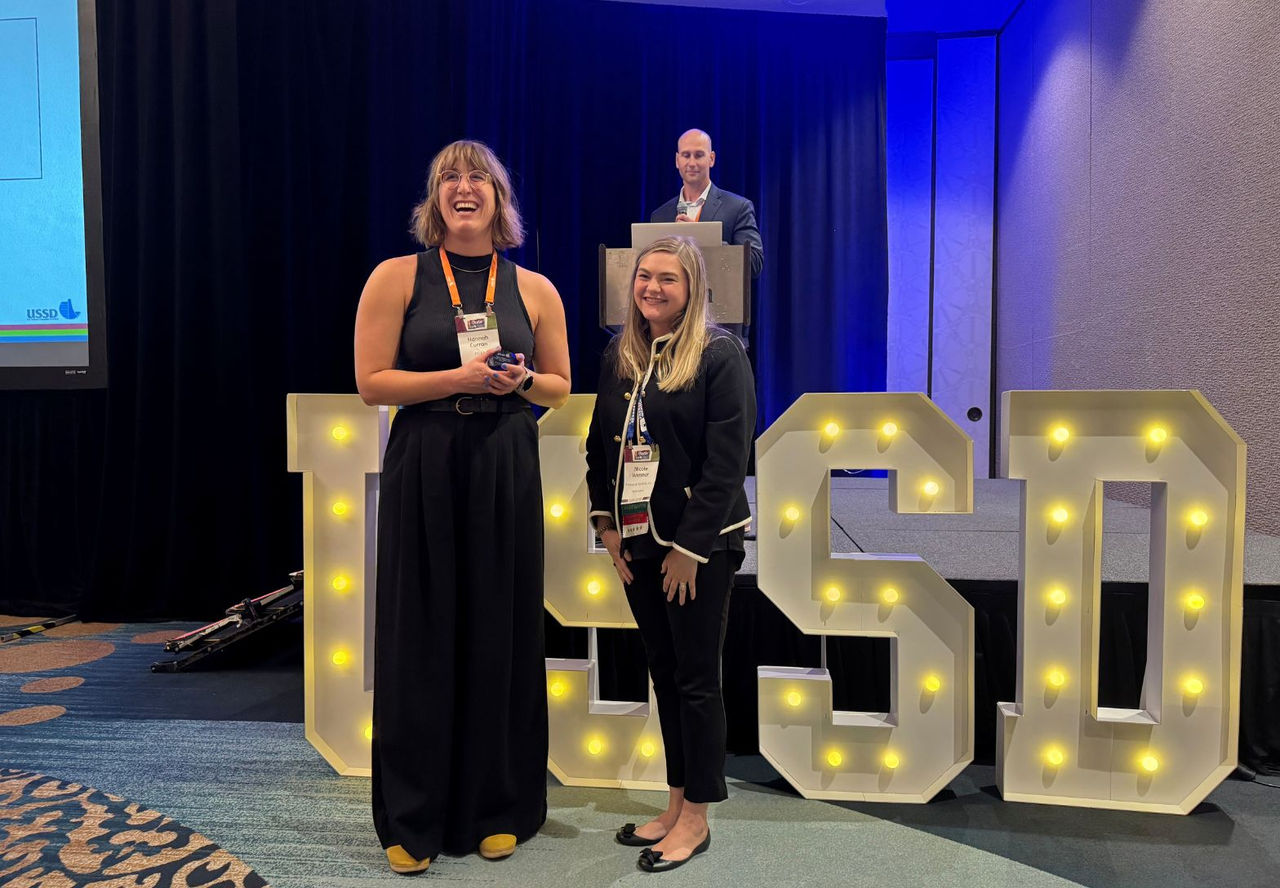
In May, Curran received the Outstanding Paper and Presentation Award at the United States Society on Dams (USSD) annual conference in Austin, Texas. The award recognized a paper she authored with fellow Geosciences engineer Emily Steen. It shared lessons learned from a complex dam instrumentation evaluation.
The conference drew more than 800 attendees from across the country, including dam owners, regulators, consultants and engineers. More than 100 papers were submitted.
“It was the first conference paper I’d written,” Curran said. “I didn’t expect this kind of response and am honored to have been recognized by my peers in the industry.”
Solving a puzzle hidden in decades of data
The project began when a Dam Safety engineer asked Curran and Steen to take a closer look at the more than 100-year-old Lake Almanor dam.
The request quickly became a deep dive into historical records, engineering documents and decades of data.
“We spent a lot of time in the weeds, looking through documents, verifying things and thinking of different ways to look at the data,” Curran said.
As the work wrapped up, the team recognized they weren’t just answering a question about one facility. They were using methods that could be applied elsewhere to help other engineers tackle similar challenges. They wanted to share these approaches and lessons learned with the broader industry.
Sharing lessons learned beyond PG&E
Curran had attended USSD conferences before and knew many presentations focused on highly technical findings. She and Steen wanted their paper and presentation to be different.
Instead, they focused on practical lessons that other engineers could apply in their own work.
“We wanted practitioners to have a framework,” Curran said. “Something they could actually use and incorporate.”
The response exceeded their expectations.
Several engineers approached Curran to share similar challenges at their own facilities. Another dam owner even invited her to share the presentation with their engineers.
“It was clear there was interest in this topic,” she said. “People appreciated having practical examples they could apply to their own work.”
For Steen, the response reinforced something she has believed throughout her career.
“The data have a story to tell if you know how and are willing to analyze them,” she said.
While Curran isn’t rushing to write another conference paper anytime soon, the experience reinforced something she hadn’t fully appreciated before.
“Sometimes the work you’re doing feels routine because it’s what you do every day,” she said. “But there can be a lot of value in sharing those lessons with other people.”