©2026 Pacific Gas and Electric Company
IMPORTANT

Understanding PG&E Substation Inspections and Audits
Date: January 12, 2026
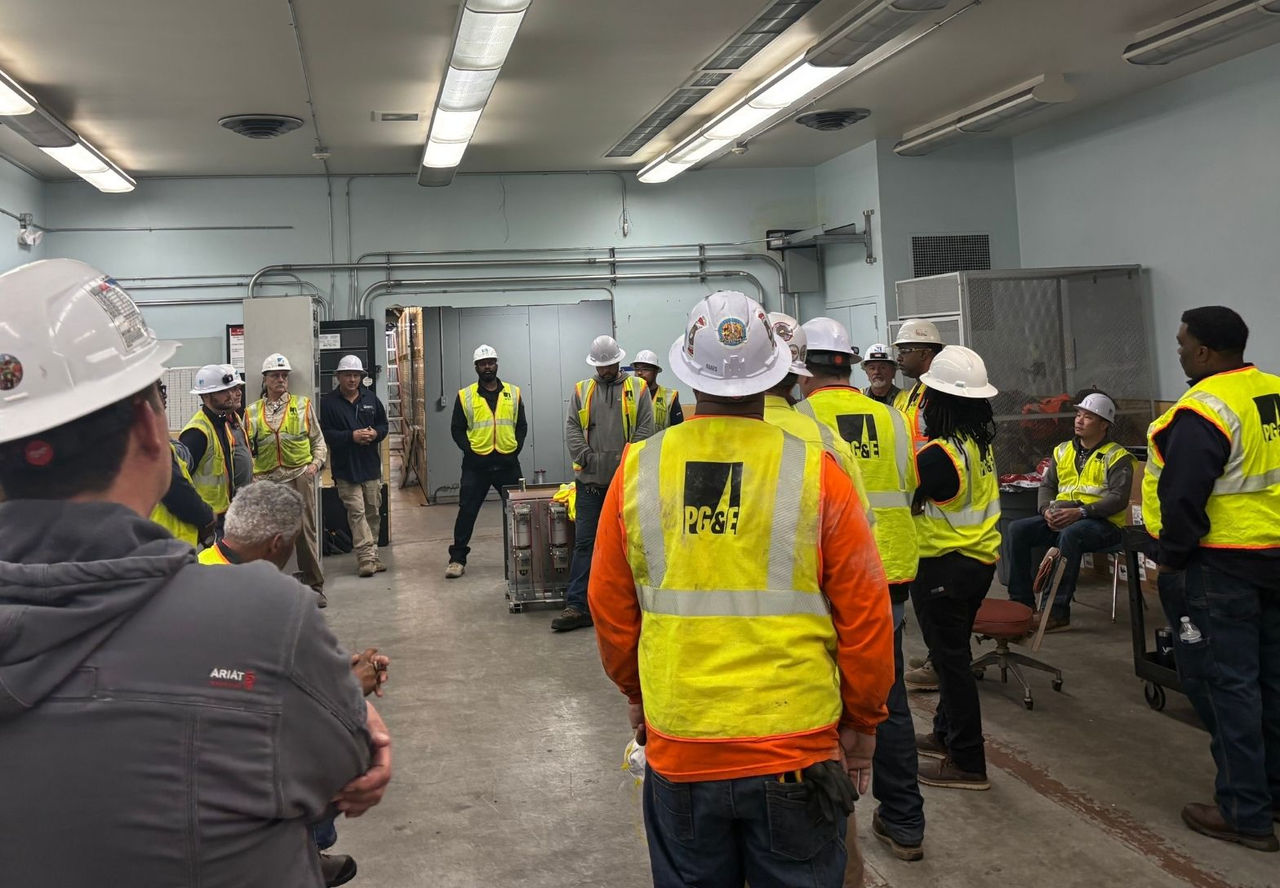
We know our response to the Mission Substation fire and outage fell short as we need to do better in providing our customers with accurate estimated time of restorations and in our engagement with our local elected officials. Hundreds of our coworkers worked through multiple nights, conceiving and executing one of the most complex and temporary solutions to restore power after the Mission Substation fire and outage.
Since the temporary restoration, our teams have continued to focus on supporting the incident around the clock, making permanent repairs, incorporating learnings and restoring service safely. We have an unwavering commitment and focus to better serve our customers and our hometowns across Northern and Central California that we are so privileged to serve every day.
For more than 120 years, PG&E has had the privilege of providing electric service to the City of San Francisco. We understand the responsibility we have to our customers and when something happens, we own it, learn from it and get better. We also stay proactive by anticipating issues and strengthening our systems before problems emerge.
The recent fire at the Mission Substation caused a major disruption for approximately 130,000 of our San Francisco customers over the holiday. We have brought in a third-party engineering firm to complete a cause analysis, the results of which we will share publicly, and are taking all necessary actions so that an outage like this doesn’t happen again.
Some of the major actions we are taking include:
- Safely returning the Mission Substation to reliable operations
- Deploying a Power Outage Rapid Response Team to minimize further disruption to San Francisco customers
- Improving communications with customers and stakeholders
- Taking a series of “no regrets” actions to further strengthen reliability for San Francisco substations
- Conducting a cause analysis and pursuing all necessary remediations
We also know that there are many questions about what happened and our San Francisco infrastructure. Below, we address key concerns and provide answers.
What is a substation?
An electrical substation is a vital part of the power grid. A substation is like a major airport hub: Large volumes of electricity arrive at very high “long-distance” voltages and are transferred into lower voltages that feed many smaller local routes and deliver power to homes and businesses. Every substation is crucial for our customers to receive safe and reliable electric service.
How many substations does PG&E operate?
PG&E manages more than 900 transmission and distribution substations across our 70,000-square-mile service area. These facilities vary in size and design — some are large, others small; some are indoor, particularly in San Francisco and Oakland, while others are outdoors. PG&E has 31 substations in San Francisco and northern San Mateo County. Our extensive system also includes nearly 107,000 miles of electric distribution lines and nearly 18,000 miles of transmission lines, all ultimately connected to our substations.
Has PG&E invested in San Francisco maintenance, repairs and upgrades?
Yes. In the last 20 years, PG&E has invested more than $3 billion in our San Francisco electric infrastructure. This includes more than $700 million invested in San Francisco substations with a substantial rebuild and upgrade of the Mission Substation in 2010.
This work has helped San Francisco’s reliability to be ranked one of the highest among major California cities over the last decade and in second quartile nationally.
How frequently are substations inspected, and what does that process entail?
We have an established inspection and maintenance process for our substations that prioritizes safety and reliability. When we find a problem, we take immediate corrective actions.
That means we have a multi-layered inspection program for our substations that includes:
- Regular visual inspections
- Enhanced inspections
- Annual infrared assessments
- Quality verification audits
These evaluations — both visual and technical — aim to identify potential issues before equipment fails, reducing the risk of unsafe incidents. For example, Mission Substation is subject to inspections once every two months, with the most recent one conducted in early December.
Additional inspections include:
- Substation drone inspections for outdoor substations in High Fire Threat Districts and High Fire Risk Areas every three years, with some higher-risk locations inspected annually.
- Infrared inspections are conducted at least once annually at all substations.
- Routine visual inspections occur monthly or bimonthly dependent on the substation.
Ultimately, these inspections did not detect an issue at Mission Substation prior to the fire and outage.
Do regulators review PG&E’s inspections and conduct their own audits?
Yes, in addition to our regular inspection and maintenance programs regulators routinely audit our operations. Beyond these audits, our electric operations undergo an evaluation as part of the ISO 50001 certification process, an international standard that provides a framework for systematically improving energy system, including electric system performance. In addition to our internal quality verification audits, multiple external stakeholders review and assess gas and electric operations, providing valuable observations to PG&E on a recurring basis.
We take all feedback from regulators and external parties seriously, acting promptly to address audit findings and prioritizing any issue that could potentially pose safety, ignition, or significant reliability risks.
For example, in September 2025, the Electric Safety and Reliability Branch of the CPUC’s Safety Enforcement Division issued an audit of our San Francisco and northern San Mateo County substations. This review included both records audits and on-site visits for 21 substations. We have addressed, or are actively addressing, all findings from these audits and on-site visits in accordance with CPUC requirements.
What happens when an audit identifies a maintenance issue?
As part of our routine operations, we respond to audit findings. We do this because it is a regulatory requirement but also because we want to make improvements and address any issues if they arise. Often, audits identify issues that PG&E already self-identified through our own processes and we actively correct the issues.
It is also common for audits to review historical records from several years prior to the audit year, meaning many findings may not reflect current conditions at the time of an audit. As mentioned above, all issues cited in the most recent CPUC audit at Mission Substation have been, and continue to be, addressed per regulatory standards. Moving forward, we are working with a third-party expert to fully understand the cause of the fire at the Mission Substation and will implement learnings across all our substation operations.