©2026 Pacific Gas and Electric Company
IMPORTANT

A Gas Pipeline That Changed California: Celebrating 75 Years of the 'Super Inch'
Date: January 06, 2026
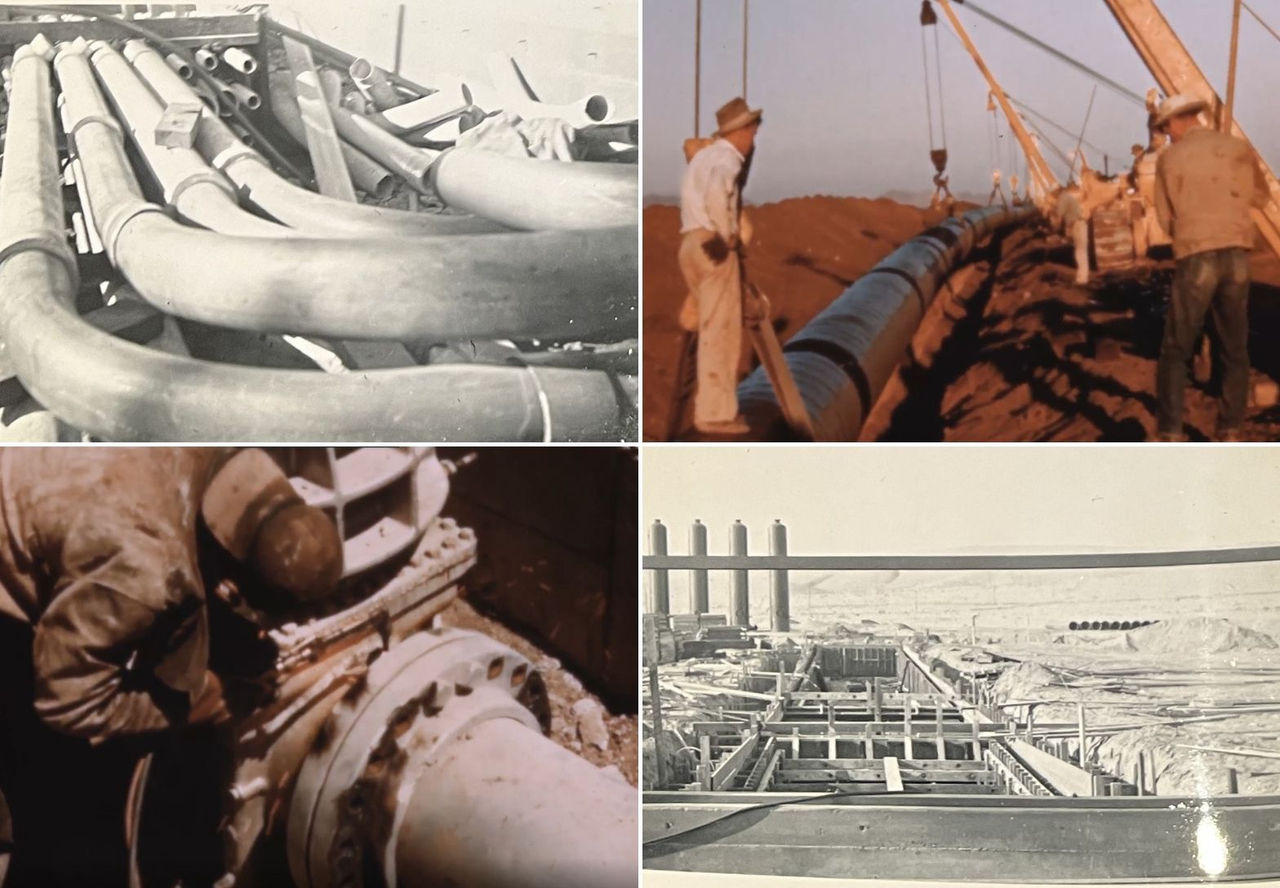
There are plenty of ways to move energy across California — trucks, trains, ships. But 75 years ago, PG&E gas engineers imagined something no one thought was possible: a pipeline so large and capable that it would change how natural gas reached millions of homes and businesses.
That idea became reality on Dec. 26, 1950, when the Baja Path, known then as the “Super Inch,” went into operation. Just a few days later, on New Year’s Day 1951, the first deliveries of out-of-state natural gas began flowing into California. Today, this backbone of PG&E’s system still plays a critical role, supplying more than one-third of the gas volume to our customers with its parallel pipeline constructed in 1954.
Stretching more than 500 miles from Topock, Ariz., to Milpitas, the Baja Path consists of two parallel pipelines, each 34 to 36 inches in diameter. At the time, it was the largest high-pressure natural gas pipeline in the world, which was a direct response to surging postwar demand and declining in-state supplies. By connecting California to supplies in Texas and New Mexico, the “Super Inch” helped fuel growth across Northern and Central California.
Construction of this monumental project began in 1949 and meant crossing deserts, rugged mountains, rivers and valleys. Crews worked through harsh conditions with trenching machines that weighed more than 34 tons and could dig a mile-long trench in a single day. The team pioneered techniques like “double-jointing,” welding two 30-foot pipe sections into 60-foot lengths and developed mass-production welding operations. More than $1 million, or about $14 million in today’s dollars, was invested in custom-built equipment to meet the project’s demands.
Innovation was at the heart of this operation, as the pipeline introduced large-scale mechanization, precision welding and advanced logistics. High-efficiency compressor stations and remote communication systems, including radio telephones for field coordination, set new standards for utility operations nationwide.
"As we celebrate the 75th anniversary of the Baja Path, we reflect on a monumental achievement that has shaped the energy landscape of California," said Gas Engineering Vice President Austin Hastings. "This project laid the foundation for the reliable and efficient delivery of natural gas, fueling growth and prosperity across Northern and Central California."
The “Super Inch” was more than an engineering achievement; it marked a turning point for California’s energy future. It showed what is possible through innovation, collaboration and strategic investment — lessons that continue to guide PG&E’s infrastructure planning today.
As we celebrate 75 years of the Baja Path, we recognize the vision and grit of the teams who made it possible and reaffirm our commitment to delivering safe, reliable energy to the communities we serve.