©2026 Pacific Gas and Electric Company
IMPORTANT

State Coastal Commission Approves Diablo Canyon Certification
Date: December 11, 2025
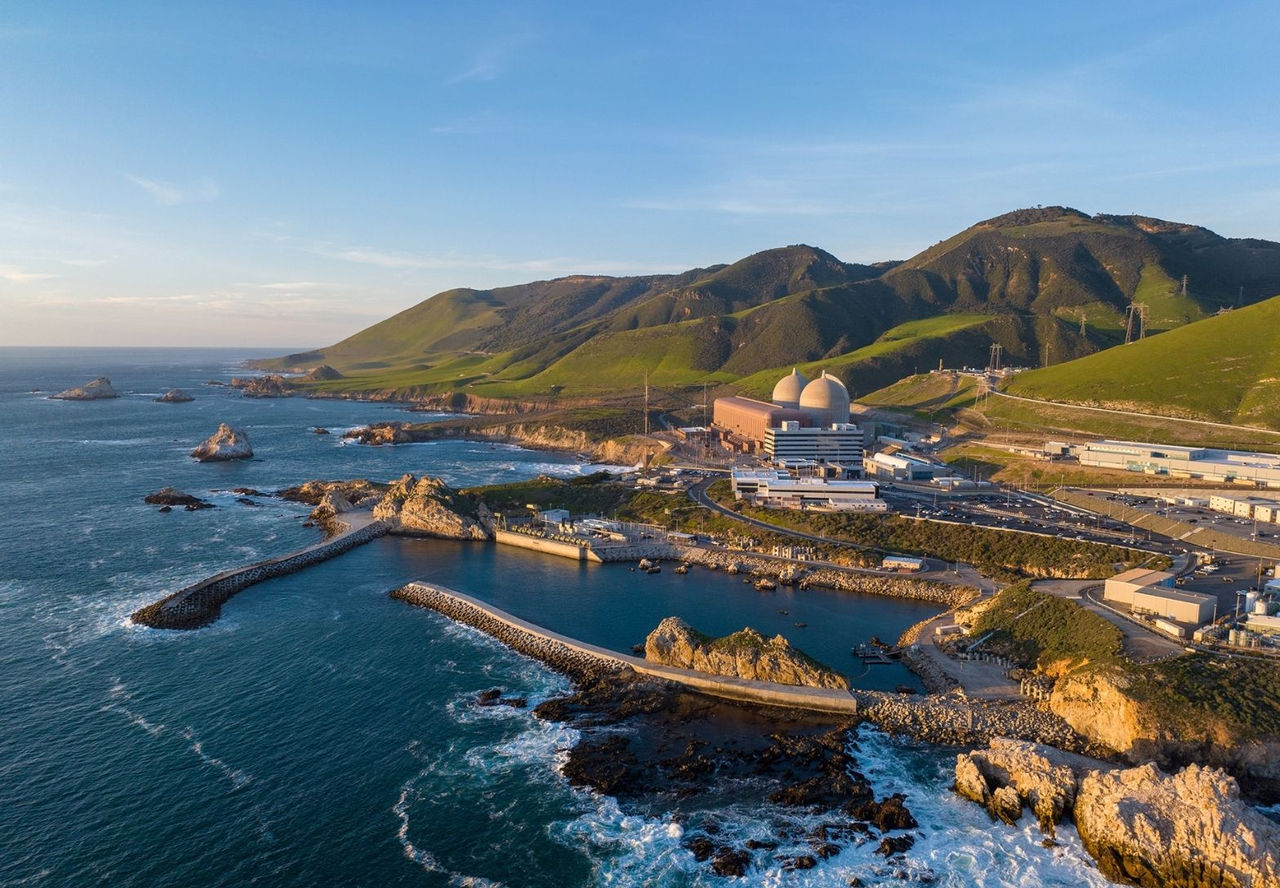
The state agency that protects California’s coast has given its approval to the continued operation of Diablo Canyon Power Plant in San Luis Obispo County.
On Thursday (Dec. 11), the California Coastal Commission voted to approve Coastal Zone Management Act Consistency Certification and Coastal Development Permit for Diablo Canyon.
The approval followed a process through which Diablo Canyon embraced feedback from the commission, customers, advocacy groups, elected officials and other stakeholders to bolster conservation measures.
As part of the certification, and to help protect and enhance the area around Diablo Canyon as part of extended operations through 2030, PG&E will:
- Protect 4,500 acres of North Ranch through conservation easements and potential transfer to expand Montaña de Oro State Park by 50%, or transfer to other tribal or public entities
- Establish a purchase option for Wild Cherry Canyon, enabling potential future conservation
- Dedicate 25 miles of new public trails, including Point Buchon and Pecho Coast loops, San Luis Hill access, and a through-trail linking Montaña de Oro to Port San Luis
- Contribute $10M for trail development, maintenance, and stewardship
- Commit not to sell South Ranch lands until 2040, ensuring Commission oversight during decommissioning
If Diablo Canyon’s operations continue after 2030, additional conservation measures would include:
- Expanding South Ranch conservation deed restrictions to 2,490 acres, covering all coastal zone lands
- Providing government agencies, nonprofits and California Native American Tribes first purchase rights for all 5,000 acres of South Ranch, with mandatory conservation easements
“We’re proud of our collaboration with the California Coastal Commission and community stakeholders to preserve and protect Diablo Canyon’s lands for public use and environmental stewardship,” said Diablo Canyon Senior Vice President and Chief Nuclear Officer Paula Gerfen. “Today’s vote permanently preserves a portion of Diablo Canyon lands for public use, environmental stewardship, and cultural resource protection. This plan supports the continued operation of a major source of reliable electricity for California, and in alignment with our state's clean energy goals and focus on coastal protection."
Members of the California Coastal Commission praised PG&E’s collaboration with stakeholders during the process to revise the conservation plan.
“Our staff and PG&E went away from the (November) meeting and put their heads together in a good-faith, collaborative way,” said Commission Chair Meagan Harmon. “The result is a revised proposal that is meaningfully responsive to our concerns as we laid them out last month. All of us, through this iterative, collaborative process, have done the important work of giving life to the coastal act. I share the belief that these increased mitigations will be of significant benefit to the state of California for years to come.”
Commissioner Jaime Lee “commended PG&E for coming back to the table with a thoughtful approach on a safe and monumental path toward conserving land that will change people’s lives for generations. It comes not on the back of ratepayers but over time, and it’s achieved for free on a natural path.”
Extended operations on track
The certification is yet another milestone in extending the power plant’s operations through 2030. Diablo Canyon provides about 10% of California’s electricity and nearly 20% of its clean, carbon-free energy.
In 2016, with a decline in energy demand and state goals to add solar and wind energy, PG&E agreed with environmental and labor groups to retire Unit 1 in November 2024 and Unit 2 in August 2025.
State regulators approved the agreement in 2018.
But after statewide rotating outages during a heat wave in 2020 and new demand projections in 2022, California lawmakers passed and Gov. Gavin Newsom signed Senate Bill 846, directing Diablo Canyon to run through 2030 for grid reliability and clean energy supply.
In 2023, Diablo Canyon submitted a license renewal application to the U.S. Nuclear Regulatory Commission (NRC) to renew its license.
The Nuclear Regulatory Commission has completed its review of Diablo Canyon’s license renewal application. The commission found in June that Diablo Canyon is safe and environmentally sound to operate for another 20 years.
The only step remaining in the license renewal process is the approval of permits through the Central Coast Regional Water Quality Control Board.
Meeting energy demand
Beyond being the state’s largest source of clean energy, Diablo Canyon runs 24/7. That makes it a steady power source as energy needs increase across the state.
One big reason demand is rising: Data centers need lots of power, and the industry is growing.
The California Energy Commission says demand from data centers could grow by four gigawatts in the next 10 years. The commission anticipates its next forecast will at least double. PG&E’s August 2025 estimate says demand could rise as much as 10 gigawatts. That equals the energy of nearly five Diablo Canyons.
Overall, the California Energy Commission expects peak electricity demand to grow by more than 20 gigawatts by 2040. That is equal to the energy of nine Diablo Canyons.
On Aug. 27, 2025, Diablo Canyon’s Unit 2 officially began extended operations — one day after it was set to shut down. Unit 1 began extended operations in November 2024.
Benefits for customers
Diablo Canyon’s extended operations through 2030 provide many benefits to electric customers across California.
For example, 2024 estimates show that Diablo Canyon resulted in wholesale electricity costs savings of $474 million for customers across the PG&E electric system.
There are big societal benefits as well.
Extended operations include cost benefits of $450 million annually due to avoided greenhouse gas emissions.
Diablo Canyon’s extended operations through 2030 are expected to annually reduce greenhouse-gas emissions equivalent to carbon-dioxide emissions from 1.6 million cars.
The Nuclear Regulatory Commission remains on track to approve the plant’s license renewal application in the first quarter of 2026.