©2026 Pacific Gas and Electric Company
IMPORTANT

How PG&E Is Helping Make EV Life Easier and Smarter
Date: June 25, 2026
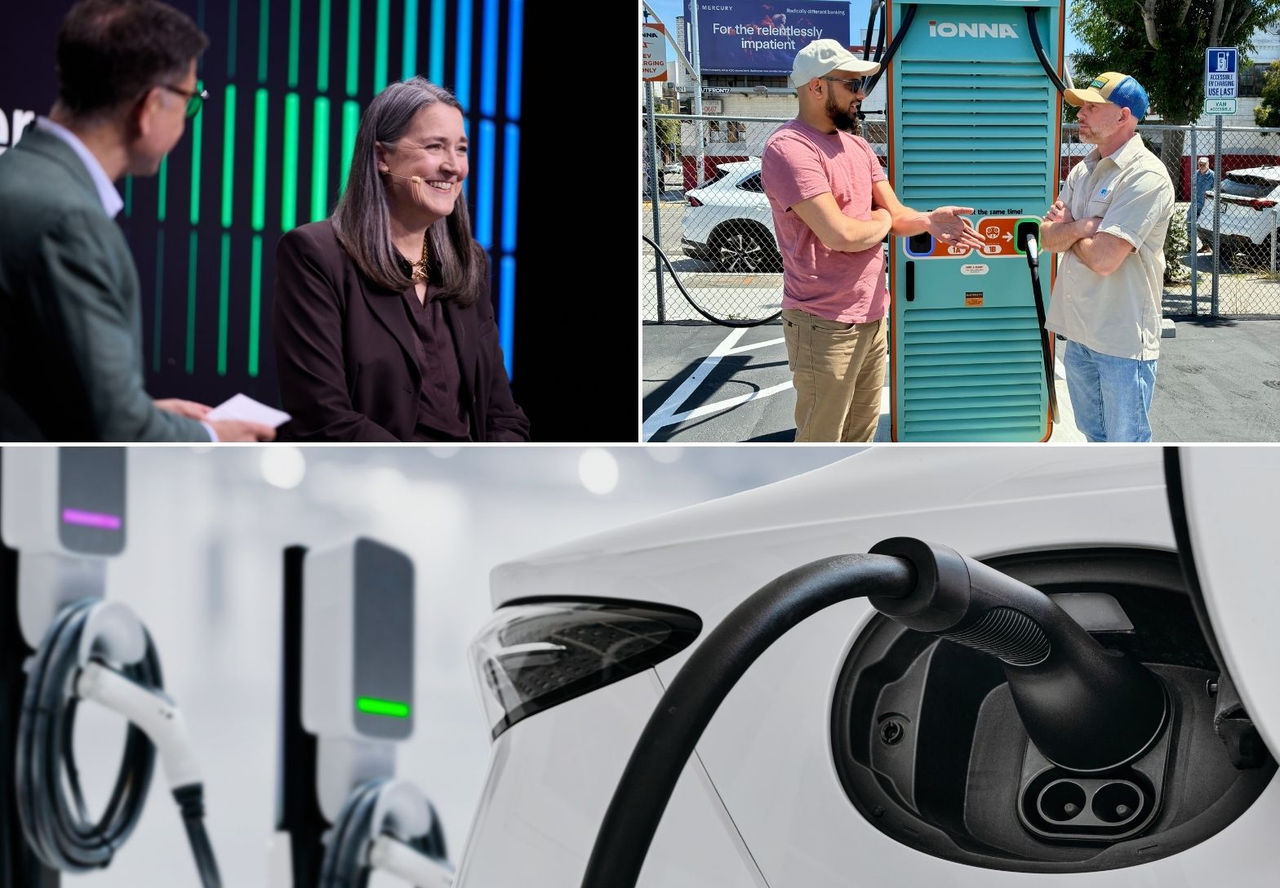
On a sunny June morning in San Francisco’s SoMa neighborhood, EV drivers were doing something that felt refreshingly normal: charging their cars, grabbing coffee, chatting with neighbors and asking questions. Will this charger work with my car? How fast is it?
At IONNA’s new Folsom Street site, PG&E showed up with answers. Yet this moment captured something bigger: California’s EV story is changing. It is no longer just about convincing people to go electric. Almost 1 million EVs have been sold in PG&E’s service area.
EV ownership feels easier and more reliable than ever. This is where PG&E’s partnerships are helping move things forward.
What customers saw that morning in SoMA was only part of the story. Behind the scenes, PG&E teams work across the company to get the site ready on time. Liz Friedman, an engineer on PG&E’s Service Planning & Design team, said the project faced permitting challenges and a last-minute technical surprise when crews found an unexpected kind of electric cable connection. As the opening date got closer, the pressure grew.
“There was no way we were going to let down the customer,” Friedman said. Getting it done took what she called a “One PG&E effort” across service planning, construction, engineering, field metering and more.
This is part of what makes this story so compelling. The customer experience may look simple on the surface, but it depends on so much coordination, problem solving, and care behind the scenes.
This story does not stop at charging. At GM Empower 2026, another side of the EV future came into focus, one where EVs become more valuable once they are plugged in. On stage, PG&E CEO Patti Poppe put it plainly: “Our grid desperately needs EVs, particularly bi-directional EVs.”
Poppe’s point was clear: EVs are becoming more than vehicles. They can also help support the grid, improve reliability, and create new value for customers. Drivers don’t want to decode jargon. They want to know:
Will it work?
Will it be fast?
Can I get on with my day?
As a recent Fast Company article made clear, EVs have real potential to help support the grid. But getting there at scale still depends on lowering installation costs, streamlining approvals and making the value clear for customers. In other words, the future is promising, but it only works if it also works in real life.
David Almeida, PG&E’s director of Clean Energy Transportation, points to PG&E’s work with Zum, the student transportation provider behind all-electric school bus fleets in cities like Oakland and San Francisco, as real-world examples of how batteries can help support the grid and reduce the need for distribution infrastructure upgrades.
PG&E is helping build that future by enabling charging networks, preparing the grid and testing how EVs can one day do even more, from powering homes to sending electricity back when it is needed most.
When the right partnerships come together, EVs stop feeling like a future idea and start solving real problems for real people. And that is exactly what PG&E is helping bring to life.