©2026 Pacific Gas and Electric Company
IMPORTANT

How Data Centers Like Amazon’s Can Lower Electricity Bills
Date: January 05, 2026
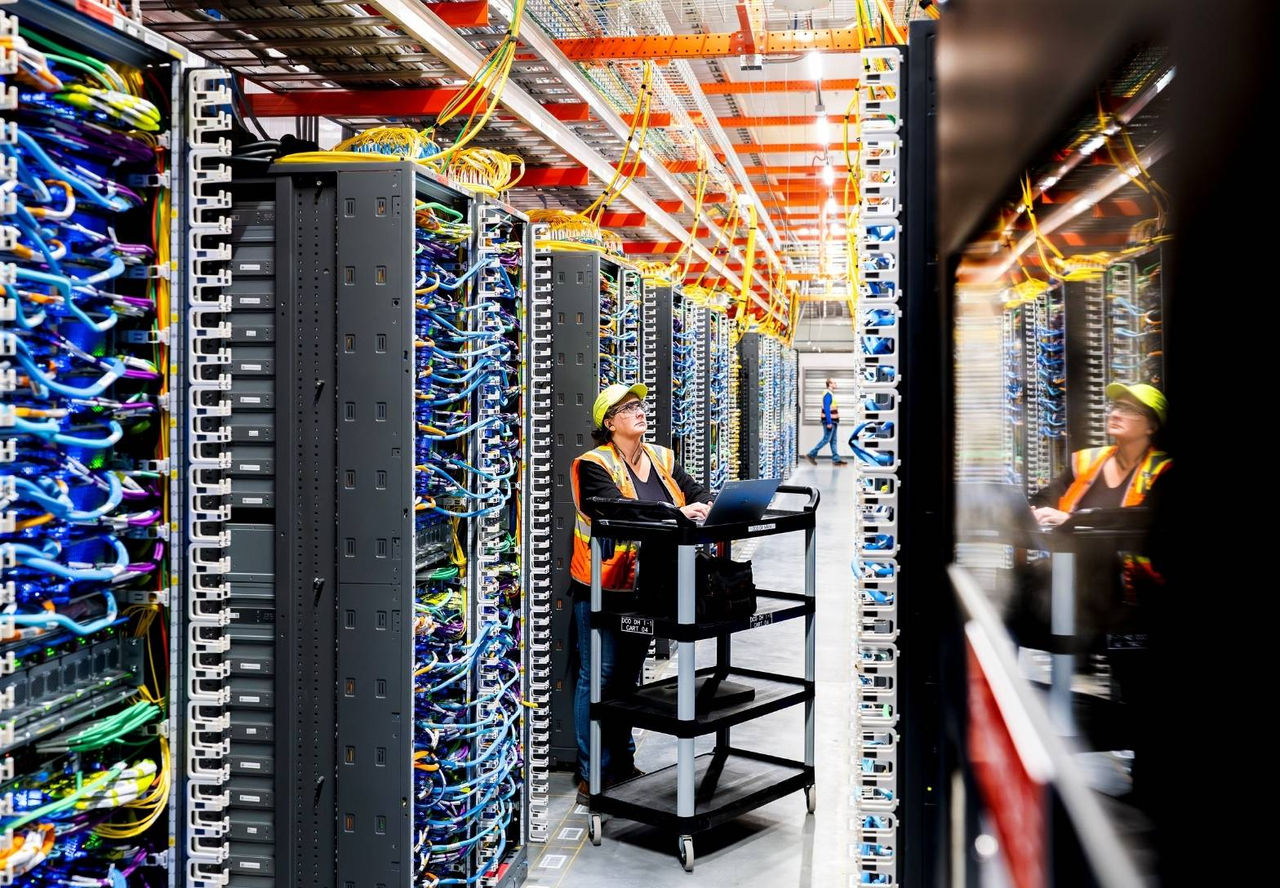
Data centers — like the ones Amazon uses for cloud computing and artificial intelligence — use a lot of electricity. Some people worry that these centers might make electricity bills higher for families and businesses. To check, Amazon asked an independent group called Energy and Environmental Economics to study the impact.
Key findings: data centers don’t raise bills
- Data centers pay their own costs. Amazon pays utilities enough money to cover the cost of serving them. In fact, in every place E3 studied, Amazon’s payments were more than enough.
- Extra money helps customers. In 2025, a typical 100 megawatt Amazon data center is expected to give utilities about $3.4 million in extra revenue. By 2030, that number could grow to $6.1 million. Utilities can use this money to help lower bills for other customers.
- No subsidies. Families and businesses are not paying extra to support Amazon. Instead, data centers can help push rates down over time.
“This independent study shows that data centers are not raising costs for our customers. In fact, they’re helping us modernize the grid and can even help lower bills over time. By working with large energy users like Amazon, we’re building a stronger, cleaner, and more affordable energy future for everyone,” said Mike Medeiros, vice president of Strategic Commercial Solutions at PG&E.
Why this helps everyone
When a large data center connects to the grid, it uses a lot of electricity. This lets utilities spread fixed costs — like maintaining power lines — over more sales. That means the cost per customer can go down.
For example, PG&E estimates that every new gigawatt of data center demand could reduce the average household electricity bill by 1–2% over time.
Data centers also use power all day and night, even during off peak hours. This steady demand helps maximize use of existing infrastructure, making the grid more efficient and cost effective.
Helping modernize the grid
Data centers don’t just pay for electricity. They often help fund upgrades like new substations and transmission lines. These upgrades make the grid more reliable and allow more clean energy, such as solar and wind, to be added.
Amazon is helping add nearly 4.2 gigawatts of new solar and wind energy in the regions studied — enough to power more than 1 million homes.
Looking ahead
The study says that as data centers grow, utilities must keep updating their rate designs to share costs fairly. PG&E is already doing this with its new Rule 30 tariff, which lets data center developers pay for grid infrastructure upfront.
This approach speeds up connections and protects PG&E’s customers from financial risk if a project stalls. PG&E also uses a new Cluster Study method to analyze grid needs for whole regions at once. With this, 1.4 gigawatts of new data center projects have already moved into the final engineering stage.
The tariff clearly explains the process, costs, and how developers can get paid back once their projects go online. This way, PG&E’s customers benefit when new demand arrives but are protected if it doesn’t.