

©2025 Pacific Gas and Electric Company
Should You Turn Off the AC When You’re Out? Experts Say Not Always
In most of the U.S., this summer has been an absolute scorcher—which means that if you're lucky enough to have air conditioning, you're probably wanting to run it nonstop when you're at home. But you may be seeing the results of that in your electric bill, as sky-high temps lead to sky-high energy costs. (Air conditioning accounts for 12% of the electricity usage in households, according to the U.S. Department of Energy.)
You might think that turning off the AC while you're away and turning it back on when you're home will help you save money and reduce the strain on your air conditioning unit. But the right answer isn't quite so simple.
Learn the best way to maintain a comfortable temperature and a slightly more comfortable electric bill this summer.
There's No One Good Answer to the "AC On or Off" Question
If you've seen a lot of contradictory advice out there on this topic, there's a good reason—there's no one right answer to this question. "Every house is different and a bit of a weirdo," says Jennifer Amann, senior fellow of the buildings program for the American Council for an Energy-Efficient Economy. "It depends on what kinds of projects have been done, the orientation of your house, if your neighborhood has less tree cover than others. Every house has a different climate." Your local power company can also play a role—like if they charge off-peak pricing that's cheaper overnight, it may make sense to "pre-cool" your house to a lower temperature, and then let it warm during the day, says Gerrit Jan Reinders, CEO of climate systems company Reinders Corporation.
And beyond that—as anyone who's had thermostat wars with their roommates or partners can attest—every person has a different comfortable temperature—and that also plays a role in how you set your temperatures. "The most important thing is to find a habit or a way of setting things that works for you, and that you can live with," Amann says. "For instance, a lot of people recommend setting it higher at night, but I’d rather be watching TV slightly warmer, and have it be cool when I'm sleeping. Figure out what works for you."
When You Should Keep Your AC Running While You're Away
If you live somewhere with a lot of humidity
Yes, there is a difference between dry heat and humid heat—and because an air conditioning unit pulls humidity out of the air to help cool it, it's essential to keep it running to manage the moisture in the air if you live in a humid place. "For the most part, a cooling system is going to work best if you leave it on—particularly in humid areas, where having the system running is critical to controlling humidity," Amann says. "If you don't run it, you're not going to get the dehumidification benefits."
And that means more than just a slightly uncomfortable, sticky feeling for you—it can lead to mold and mildew growth in your home, and it can allow dust mites to thrive as well. Amann suggests allowing the humidity to get no higher than 60% to help avoid mold growth.
If you have pets
Your pets deserve cooler air, too. You may be able to run it at a higher temperature—in the 75- to 78- degree range—but you won't want to shut it off entirely if you have pets at home. The USDA requires that dogs not be left in temperatures over 85 degrees Fahrenheit for more than four hours, for example.
If you'll only be gone for a short time
Engineers modeled the energy use if you leave the AC on, turn it off for four hours, or turn it off for eight hours, in both humid and dry heat, and with different types of cooling systems. They found that while there was a lower energy usage if the air conditioner was left off for eight hours, at four hours, the difference was negligible—and in some cases, it used less energy to keep the air conditioner or heat pump on.
If you're using a high-efficiency heat pump or mini-split system
The newer high-efficiency systems tend to run best when you set them and forget them, Amann says. "You can still set slightly different temperatures day or night—or with mini-splits set to different temperatures in different rooms—but they tend to work most efficiently if you just let them go. Those systems have high efficiency, variable speed fans, so the fan speed changes to meet the temperature you need and won’t be running all the time. It's efficient at every speed."
When You Might Want to Turn Off Your AC
If you're away for an extended time
Eight hours or longer seems to be the tipping point, where turning the AC off does reduce your energy usage. Turning off the AC when you're away for a week's vacation could help you cut your costs considerably. But that could be a short-term savings that creates a whole different problem if the humidity ends up encouraging mold and mildew growth in your home.
If your house is well insulated
While you'll notice gaps in your weatherproofing more when it's cold out and you get those drafty spots, the same thing happens in the heat of summer, too. Excellent weatherproofing and insulation can help make your home air-tight — and make it harder for the heat to seep in. "It's helping your home be more like a thermos, where you’re comfortable so much longer," Amann says.
If you're using wall or window air conditioners
Rather than shut off these units altogether, you may be able to target the air conditioning to key spots (like where your pets hang out), and turn off other units while you're away.
If your power company offers off-peak rates
If you get off-peak electricity rates, Reinders recommends cooling your home during the early morning hours, then shutting off the system during your power company's peak hours and letting your home gradually get warmer. "If you're on time-of-use pricing, where electricity costs more during peak hours, shutting off your AC works against you," he says. "With pre-cooling, you're cooling your house when electricity is cheap, then letting it coast through those expensive evening hours. So instead of your AC cranking at full power during peak rates, it's barely running because your house is already cool." For pre-cooling to work, Reinders recommends running the AC at a lower temperature–like 70 degrees — so you can let the temperature rise several degrees during peak hours without becoming uncomfortable.
Ways to Save Money — and Energy — on Cooling
Whether you're leaving your home for eight or so hours for work, or you spend all day at home, there are tactics you can use (including some free or low-cost options) to reduce your reliance on your air conditioner.
Turn up the thermostat
You may have seen articles suggesting popping the temps up to 75 or even 80 degrees overnight. But you have to be comfortable, too.
If you aren't home, raising the air conditioner temperature into that higher, 78-degree range can help reduce your costs. "Every degree you set it back, you’ll save 1 to 2% — maybe a little more," Amann says. "If you set it normally at 74, and set it up to 79, you could save 10% if you work a full eight-hour shift. You'll see a noticeable difference on your bill."
Not ready to make the leap from 70 to 78? Adjust the temperature gradually. "Kick it up a degree or two, and see how your family feels," Amann says. "Maybe nobody notices."
Upgrade your AC
If you have an older air conditioner, it may not be the most energy-efficient. Upgrading to a newer, high-efficiency unit (look for the Energy Star designation) could save you between 20% and 50% on your energy costs, according to the Department of Energy.
Weatherize your home
Many of the recommendations that involve "pre-cooling" the house during off-peak hours and letting the temperature rise during the peak (and hottest) hours, or turning the air conditioning off altogether, require a well-insulated house that'll hold the cool air in — and keep the hot air at bay.
These types of projects — adding new insulation, replacing weatherstripping around windows and doors — may seem expensive, but they'll pay off in lower energy bills now — and you may need a less expensive, less intensive heating or cooling system down the line when it's time to replace, Amann says.
Clean your air filters and maintain your system
If your air filters are full of dust and dirt, it makes the air conditioner work harder to bring you cool air. Regularly cleaning or replacing the air filters can cut your energy consumption by up to 15%.
You should plan to have your system maintained every year or every other year to ensure that your air conditioner is running at peak performance.
Make your cooling system smarter
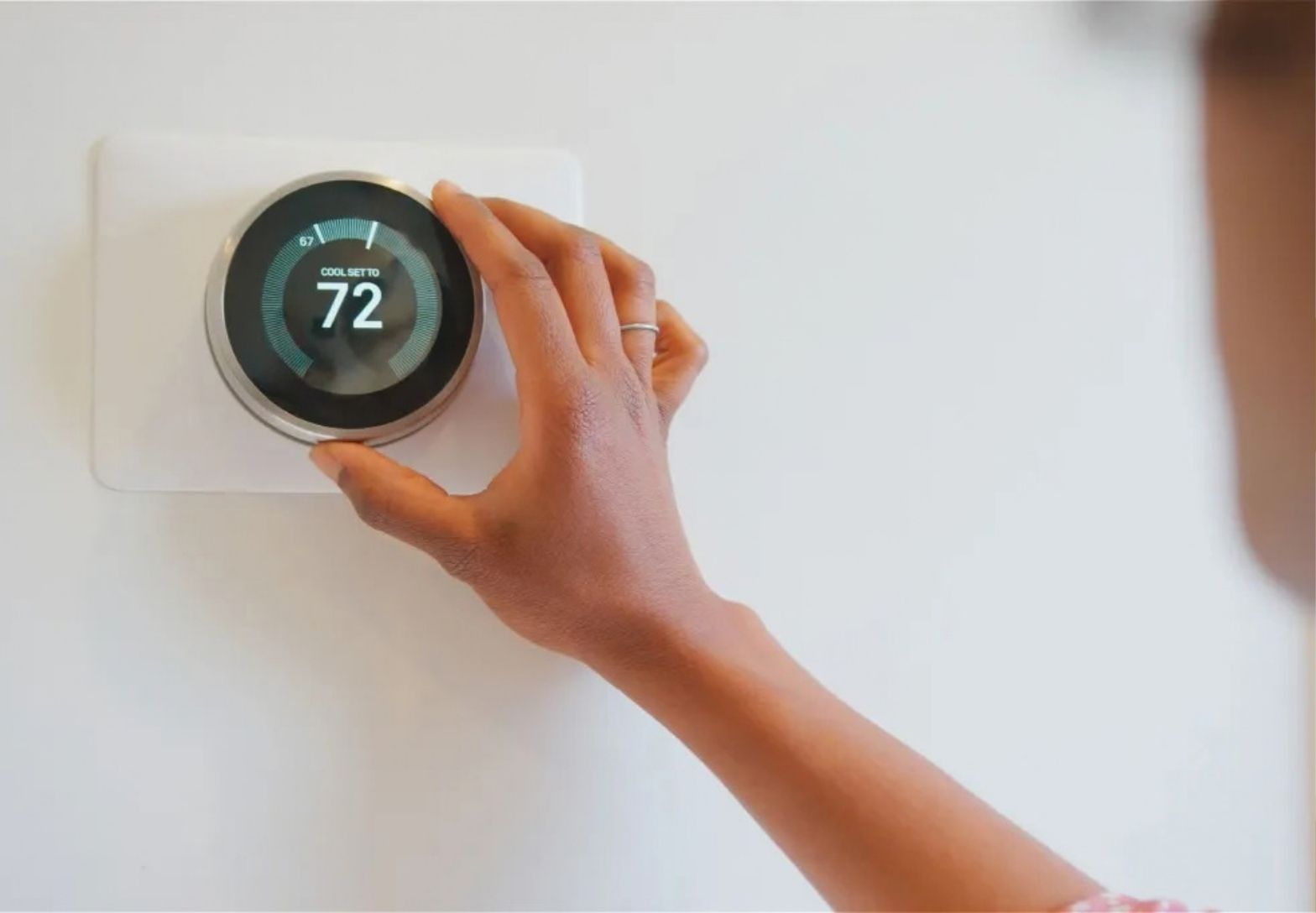
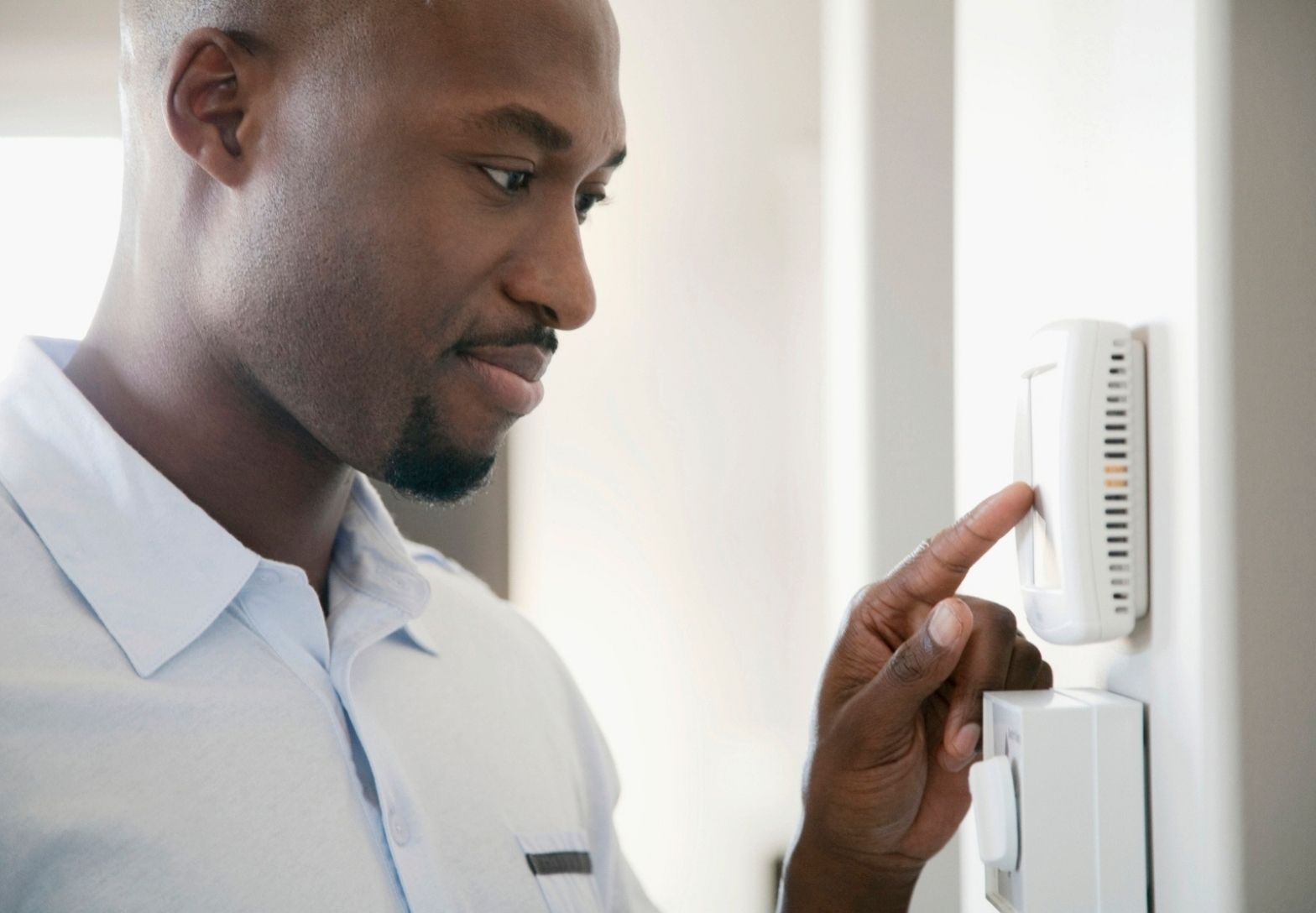
Using apps and smart thermostats can let you customize your experience. You can often place auxiliary thermostats in key spots (like bedrooms), so you can keep the rooms you're using most at a particular time of day cool, and the ones that you aren't using warmer. If you want to get really fancy, you can use geofencing, which tracks your smartphone's movements and can raise the temperature or shut off the AC when it senses you've left — and turn it to your preferred temperature once it senses that you're heading home.
Turn on the ceiling fan
Ceiling fans use way less electricity than air conditioners, and can help you feel cooler than the actual number on your thermometer indicates (as long as you have the ceiling fan blades circulating in the correct direction). To save energy, turn the ceiling fan off when no one is in the room — it doesn't help with cooling if someone isn't there to enjoy the breeze, Amann says.
If you have an older ceiling fan, this may be one place where you can get a design upgrade that's also eco-friendly and offers smart features like movement sensors that will automatically turn the fan on (and off) as people come and go from the room.
Avoid turning on the oven and other heat-producing appliances
This should go without saying, but your stovetop and oven will release plenty of heat into your house — making your AC work harder and your home more uncomfortable. Choosing a no-cook meal will help you avoid the energy expenditure both on extra cooling and on running the stove. (Or go ahead and take it outside to cook on the grill!)
For other heat-producing appliances like clothes dryers and dishwashers, Amann suggests running those overnight or when temperatures are cooler. "Do whatever you can to minimize heat loads."
Take a short, cool shower
Again, a hot, steamy shower will release moisture and heat into the air, making your AC work hard to remove both from your home. While you don't have to cold plunge, keeping to a more tepid temperature and keeping it short will help you (and your home) feel cooler.
Open windows when the temperature drops
Opening windows at night when it's cooler can help clear out heat. Amann recommends opening windows on the lower floor, and other windows upstairs to create a "stack effect" that pulls in cold air (which is heavier) and expels the rising warm air out on the top levels. You can use box fans — ones in the lower windows pulling cool air in, and in the upper windows pushing warm air out — to increase the effect.
Get some shade
That bright sunshine can bake your room and increase the heat considerably — especially windows that are west-facing and get that hot, afternoon sun. Closing blinds and curtains could help keep your house cooler, especially if you choose energy-efficient varieties. (Look for ones that have been rated by the Attachments Energy Rating Council to ensure that what you pick will help keep your home cooler or warmer — or both, depending on the season.)
Awnings over sunny windows — or shade trees — can help keep your home cooler in the summer sun. Amann recommends getting in touch with your town to see if they're offering discounted (or even free) trees. "Many communities have programs to help reduce the heat island effect."
This article was written by Lisa Milbrand from Real Simple and was legally licensed through the DiveMarketplace by Industry Dive. Please direct all licensing questions to legal@industrydive.com.