©2026 Pacific Gas and Electric Company
IMPORTANT

Project Tracker Serves Up Real-Time Details to New-Service Customers
Date: October 10, 2025
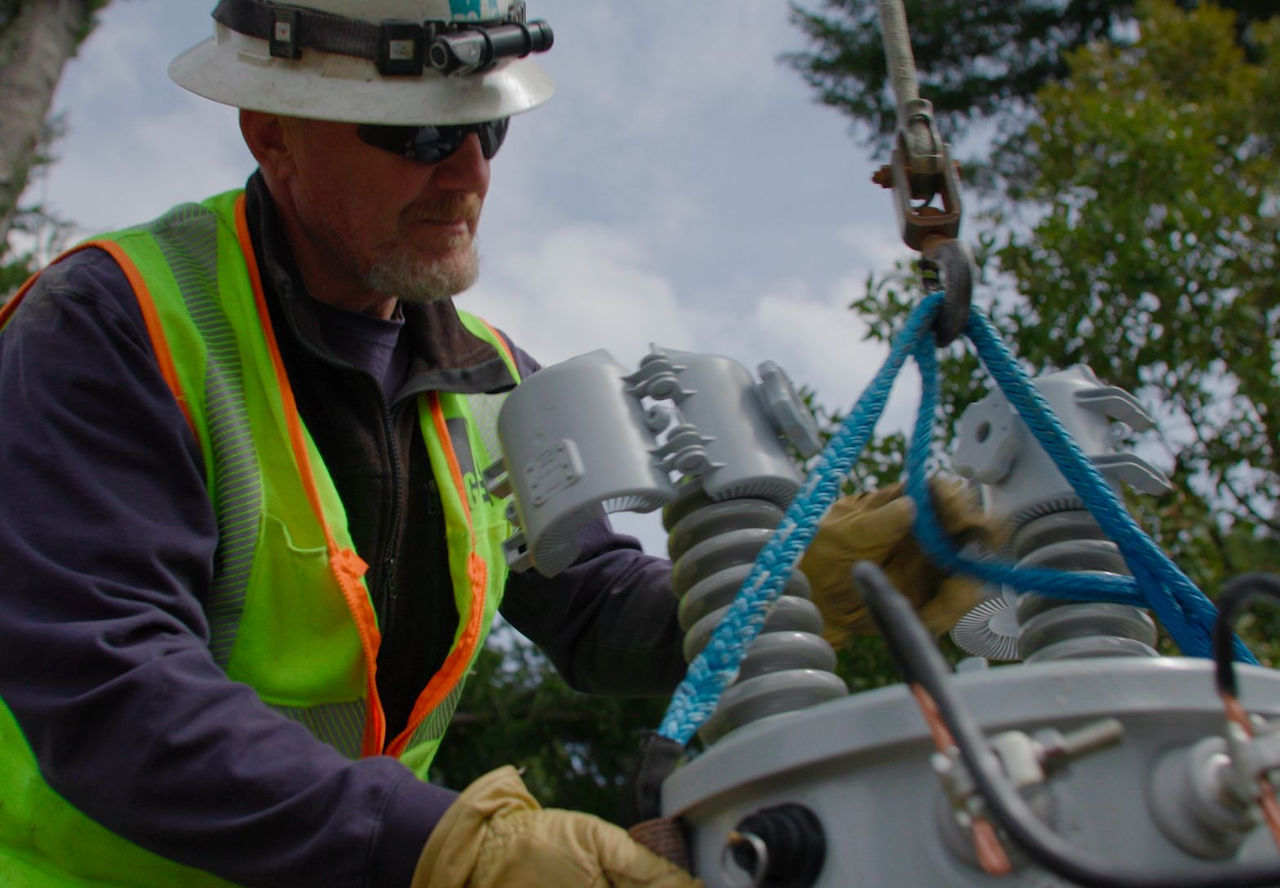
This story might make you want to order a pizza.
Better yet, it might inspire you to tackle that complex electric upgrade you’ve been thinking about.
For PG&E’s new Customer Experience team, those two worlds met in a moment of inspiration that now makes it easier for customers to see the status of their new-service project.
As part of Service Planning and Design, the Customer Experience and Design Technology Solutions teams find new ways to help PG&E customers who need new gas or electric service, or who want to upgrade or move their current service.
The teams have already made many improvements. Their work to solve the needs of specific customer segments has reduced project lead times and increased customer satisfaction scores.
But, like asking for a pie with double cheese and pepperoni, the teams wanted something extra.
“We were looking at real-world examples of best-in-class visuals for how we can show transparency in a complex process,” said Program Manager Nate Anderson. “We started joking around about the Domino’s pizza tracker. It tells you when Domino’s receives your order, when your pizza goes into the oven, when it comes out of the oven and when it’s on its way to you.”
It didn’t stay a joke for long.
PG&E’s new-service process also has several steps. What if the team developed a tracker to let customers see the real-time status of their project?
Real-time updates
After several months in development, PG&E’s Project Tracker launched in August.
Customers can see the Project Tracker on the Your Projects portal. Once the customer’s application is complete and PG&E creates a job order, customers get access to the tracker.
The tracker tells them when their project moves through the major phases of new service, including:
- Application and intake, where a new-business representative confirms project details
- Engineering and design, to verify meter locations, designs and construction documents, and to estimate cost
- Dependencies, during which customers get required building permits, land permissions and environmental approvals
- Site readiness, during which the customer prepares their project for construction
- Construction, when PG&E crews build the connection and set the new meter
Before the Project Tracker, customers who wanted to know where their project stood had to ask their new-business rep. Reps would also call their customers with updates and reminders on next steps they needed to take.
“Feedback from our customers shows they want to know timelines to complete their side of the work. They want to know what phase they’re in and who’s responsible for each action item,” Anderson said. “Today, they can instantaneously get all of that information through the Project Tracker.”
The Project Tracker also helps reps work more efficiently. Fewer phone calls or emails to customers to remind them of important milestones means more time focused on moving the project forward, Anderson said.
The Project Tracker is one of many improvements PG&E has made to its new-service processes.
For example, Service Planning and Design recently rolled out its Service Planning AI Companion. The artificial intelligence tool helps reps find fast answers on rules and standards for installing new gas or electric service.
Other process improvements have come from PG&E’s partnership with the California Building Industry Association. Based on feedback from the association, Service Planning and Design added improvements including scheduling construction as soon as customers pay, rather than waiting for all permits; and temporary power options when new service is delayed.
These improvements have made a big difference. PG&E’s backlog of design work in progress fell by 30% from 2023 to 2024, while energizations grew by 70% from 2022 to 2024.
‘Best-in-class solution’
The Project Tracker also helps PG&E comply with new California rules on how long it takes for utilities to connect new service.
The state’s energization timelines include standards on how utilities communicate project status.
But even before the new rules, improving regular communication with customers was on the team’s radar, said Alfonsa Cornejo, a PG&E manager of design technology solutions.
“We are always looking at customer surveys for new ways to keep our customers informed,” she said.
Beyond complying with state laws on how PG&E communicates with customers, the Project Tracker marks another innovation. It’s the first time two separate PG&E tech domains communicate with each other. The company’s Your Projects portal and its JobForce program, which keeps track of scheduling and planning, interact with each other to update project status.
In addition to the tracker, the portal allows customers to opt in to regular meetings with their new-business rep.
The tracker goes above and beyond what the new law requires in terms of communicating with customers, Anderson said.
“We chose to audaciously pursue a best-in-class solution that we think will not only satisfy the new requirements but will also exceed the high expectations of our customers,” he said. “And we’re not stopping here. We are laser-focused on finding truly customer-driven solutions that delight and surprise and earn those ‘10-out-of-10’ marks on our customer transaction surveys.”