©2026 Pacific Gas and Electric Company
IMPORTANT

Back to School: PG&E Helps Central Valley School Across the Finish Line
Date: December 19, 2025
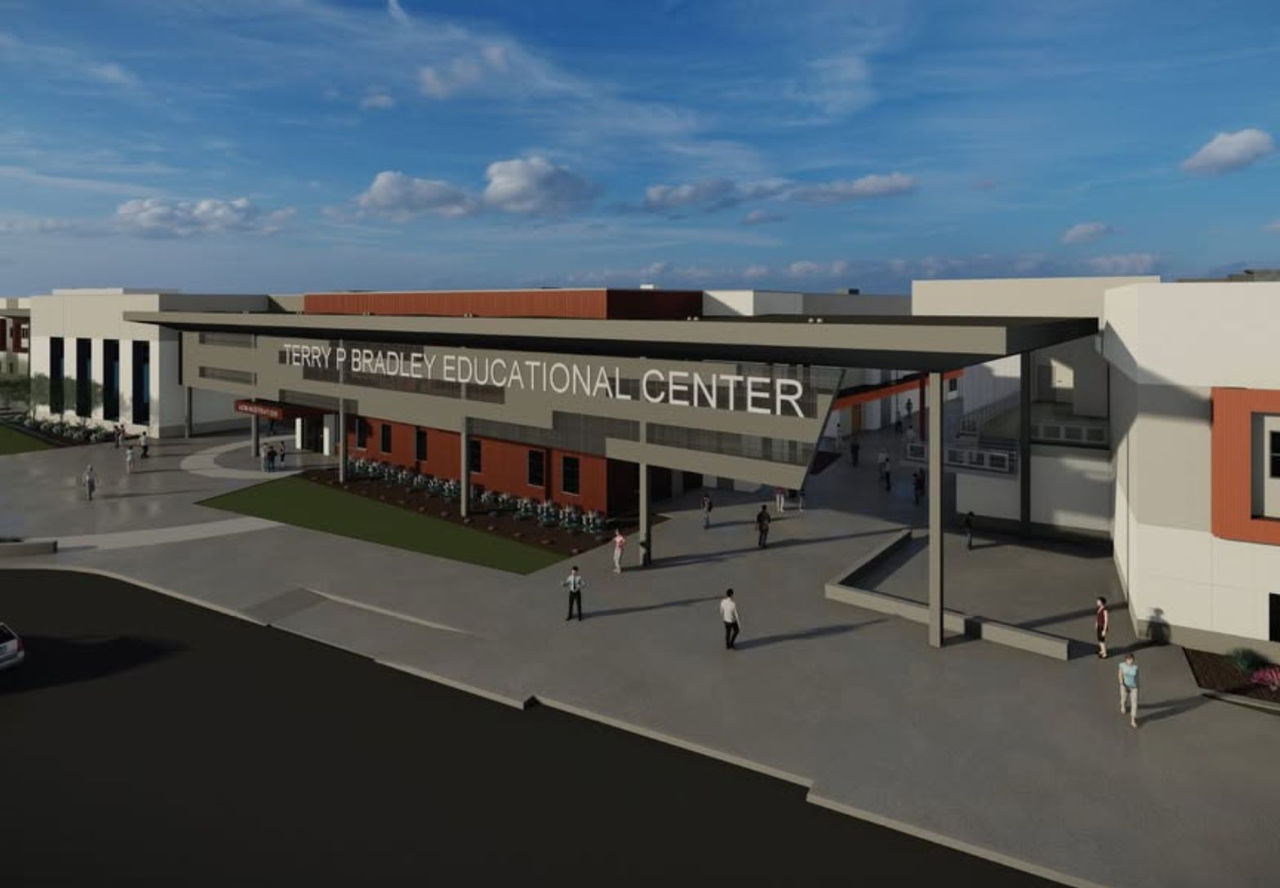
The race was on to finish the first phase of the Terry P. Bradley Educational Center.
The campus in Clovis (Fresno County) was set to welcome 1,200 students from grades 7-9 in August at its Phillip V. Sanchez Intermediate School.
Delay wasn’t an option. The district had already redrawn boundaries to accommodate the middle school.
It would be up to PG&E teams including Service Planning & Design, General Construction and Regional Leadership to help make it happen.
“The campus is critical to the area,” said Saxon Cummins, an industrial power engineer with PG&E’s Service Planning & Design team. “Clovis is adding homes and families, and those families need additional classroom space for their children. The school district has invested a lot in making this school a world-class, high-tech environment for students.”
‘We needed to work together’
The sheer amount of work proved the biggest challenge for all parties.
Service Planning & Design received nine separate applications for initial work on the middle school, including:
· Several undergrounding projects
· Utility pole relocations
· New gas and electric service
· Temporary power generation
The team also had to coordinate all that work with city and county agencies.
What’s more, the timing of the project’s start in 2022 meant long lead times for materials and equipment amid post-pandemic supply-chain issues.
At least half a dozen subcontractors were on-site to handle everything from equipment installation to land easements.
And changing street layouts caused several design revisions.
“It was extremely complex,” said Matt Davies, vice president of preconstruction with project contractor Harris Construction. “What made this particularly hard for both PG&E and us was all of the separate pieces. It wasn’t cut and dried where we could have the final project done all at once. We needed to work together on what we could get done in stages.”
It wouldn’t be easy for PG&E construction crews to make so many smaller projects gel, said Brandt Laemmlen, a supervisor with PG&E’s General Construction team.
“We’re where the rubber meets the road,” Laemmlen said. “We excel at handling big projects. When you chop a project into smaller bits designed by different teams, we have to figure out how to make it all come together. Throughout construction, we had to navigate design changes on the fly.”
The team would do all it could to make it work.
“This is our community, and we wanted to do to our part to help,” Laemmlen said.
Communication and collaboration
For Cummins, the job began with setting expectations ahead of time. That meant prioritizing projects and providing realistic timelines.
Constant communication was also key. There were frequent field visits and daily phone calls to discuss the work.
“We carved out a lot of time to meet with the customer and understand their concerns,” Cummins said. “The regular meetings were crucial—they helped eliminate a lot of back and forth between the subcontractors.”
Davies said he appreciated the regular contact.
“Saxon did a very nice job given the complexity of the project and the layers of approvals we needed in so many different areas,” he said. “He and I talked sometimes multiple times a day. Whether he had good news or bad news, he was always honest and communicative.”
Consistent collaboration from PG&E’s General Construction and Inspection teams also helped. Inspection crews, in particular, were ready at any moment to approve work.
PG&E’s construction work would also require all hands on deck.
The company would need to call up all six of its Fresno-based General Construction crews to build the new-service connection in stages. Two crews from Bakersfield traveled up to Fresno as well to help when lighter workloads allowed.
“General Construction has the best teams in place to tackle these high-priority projects,” Laemmlen said. “Out of sheer determination and grit, we will find a way to accomplish anything. We understood the criticality and urgency of this project and its benefit to the community, so we did everything in our power to stay nimble and get this done without affecting our other customers.”
Davies also had high praise for the construction team.
“I can’t say enough good things about the PG&E crews in the field and their willingness to be flexible given our situation,” he said. “Everyone was awesome to work with.”
Along the way, PG&E Regional Vice President Josh Simes pitched in to help maintain communication between PG&E and the customer, said Service Planning & Design Supervisor Stephanie Ruiz.
“Josh was really engaged in what was going on and what everyone needed to keep the project moving forward,” Ruiz said. “He was integral to making sure everything stayed on track.”
A stronger partnership
While the students enjoy their new middle school, PG&E and district officials are looking ahead.
Service Planning & Design will continue its work on the center’s current phase through 2026, completing electric work for traffic lights and streetlights on upgraded roadways nearby.
The campus will grow as well. An elementary school, a high school and a football stadium will open in coming years. Ultimately, the Terry P. Bradley Educational Center will hold 4,650 students from grades K-12.
Upon its completion, the campus will be the largest in Fresno County history, at $600 million and 170 acres.
Though there’s much work ahead, PG&E’s team already feels tremendous hometown pride in helping the school’s first stage come to fruition.
“It’s a great feeling to see the students come in, and it’s awe-inspiring to see how everyone got involved—PG&E, the school district, the developer and the contractors,” Cummins said. “We all helped it come together piece by piece to make sure this will be a great place for students for years to come.”