©2026 Pacific Gas and Electric Company
IMPORTANT

AI Helps Service Planning with Project—And Customer—Connections
Date: September 24, 2025
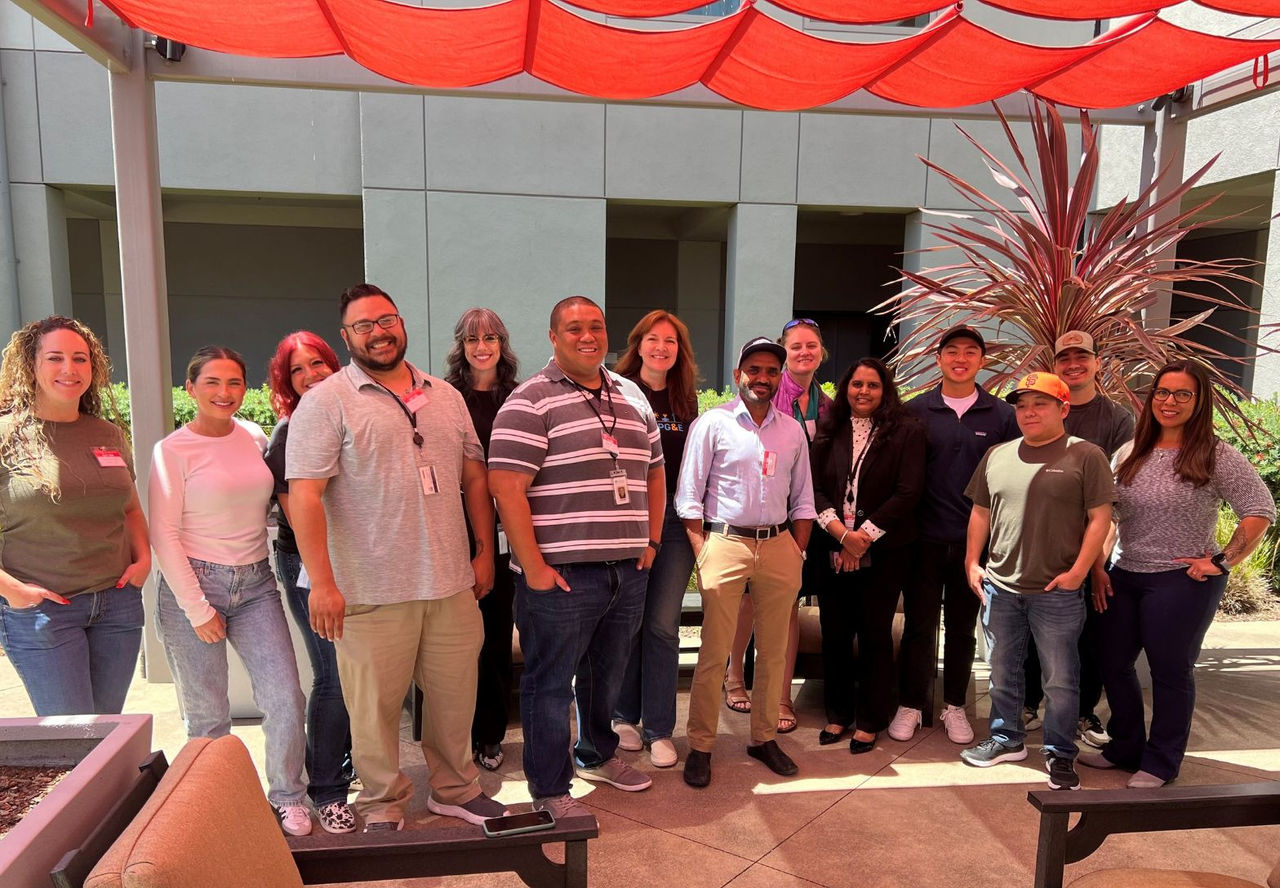
Less time searching, more time connecting.
That’s the goal of an artificial intelligence tool that PG&E’s Service Planning and Design team launched on Aug. 1.
The tool is called Service Planning AI Companion, and it’s the first time an entire PG&E team is routinely using AI every day, said Service Planning and Design Director Nina Bubnova.
Service Planning and Design serves more than 100,000 customers a year. Those customers need new gas or electric service or want to upgrade or move their current service. PG&E’s new business representatives guide customers through the process and explain rules and standards.
That’s where the AI Companion comes in.
Instead of searching through thousands of pages of documents, reps can ask the chatbot questions and get quick answers. The chatbot looks through more than 1,400 documents, including California’s utility rules and PG&E’s Greenbook Manual, which states requirements for installing gas and electric service, to help reps answer customer questions and prepare for projects.
Helping reps find faster answers leaves more time for hands-on customer service and proactive project management.
“The Service Planning AI Companion is a tremendous opportunity to increase joy at work for our new business reps,” Bubnova said. “They can spend less time looking for information and more time helping customers.”
Big improvements
The AI Companion is one of several Service Planning and Design improvements that are helping customers.
Others include:
- A real-time project tracker
- Scheduling construction as soon as customers pay, instead of waiting for all permits
- Temporary power options when service is delayed
These improvements have made a big difference. The team reduced its customer application processing time by 40%, from 76 days in 2023 to 45 days today. The team also eliminated its backlog of design work in progress and increased energizations by 70% from 2022 to 2024.
“The AI Companion is one more way for us to provide 10-out-of-10 customer service,” Bubnova said. “It’s a game-changer.”
‘The next level’
As an example of how the AI Companion works, if a rep wanted to know whether an electric panel could be placed near a water spigot, they used to have to search through PG&E’s 1,050-page Greenbook Manual. Now, they can ask the tool and get an answer in seconds.
A question about what types of service are allowed at specific properties typically required an email or call to a PG&E hotline, and sometimes, a wait for an answer. The AI Companion finds answers fast and even suggests other options if needed.
The tool is saving reps at least an hour a day of search time. One industrial power engineer used the chatbot during training to find an answer he’d been seeking for days.
In its first month, AI Companion saved the team more than 1,400 hours of search time, for more than $200,000 in savings.
Service Planning Manager LJ Hilario led a team of more than a dozen frontline coworkers, including new-business reps to develop the AI Companion library.
“The key factor in the success of this technology innovation was early involvement from future users,” Hilario said.
It took PG&E’s Business Technology team about four months to build the chatbot, said Senior Manager Anil Jacob.
The inspiration was work Jacob’s team had done to upload internal company documents for a tool to help PG&E coworkers get answers to questions about company policies.
The Service Planning tool “took that idea to the next level,” Jacob said.
“Nina and her team were very curious and driven to adopt AI to help their reps serve customers more efficiently,” Jacob said. “Once we saw the team using it in so many different ways, it was exciting to see how much value they saw in it.”
Jacob said the value has come in improved productivity and more transparency into rules and regulations.
Feedback from new business reps has been positive.
“The AI tool streamlines the process by providing quick information,” said New Business Rep Tara Kosari. “That helps overall efficiency and accuracy. It can allow us to focus more on supporting the customer and less on digging through resources.”
Industrial power engineer John Suazo recently used the tool to find information for a customer regarding large load studies.
“We are all very busy in Service Planning, and as Service Planning reps, we have a huge responsibility as frontline representatives of PG&E,” Suazo said. “This tool is helping us find important information rather than researching it manually to respond to customers’ questions more quickly.”
PG&E estimates the AI Companion could save the team up to $30 million over the next two years.
AI to drive new programs
The team is working on more AI tools.
One tool will let customers use AI Companion to ask questions about the application process and service rules.
Another will help customers estimate project costs before they apply.
The cost estimator will help reduce the number of applications for projects that never get built.
Right now, customers must go through the application, design and estimating process to learn how much their project will cost. About 30% of them cancel their applications once they see that cost.
“We dedicate the same resources to every application, even the ones that never turn into projects,” Bubnova said. “Helping customers understand their costs before they apply will let new service reps focus more on projects that will actually happen.”
The cost estimator will use details such as service type, electric demand, and whether lines are overhead or underground. It will compare those details with thousands of past PG&E projects and give a cost range before the customer applies for new service.
Both tools are expected to launch within 18 months.
Meanwhile, other PG&E departments are interested in the AI Companion. They’ve asked Bubnova’s team for demos and advice on building similar tools.
“It’s great to see how AI is helping us work together and serve customers better,” Bubnova said.